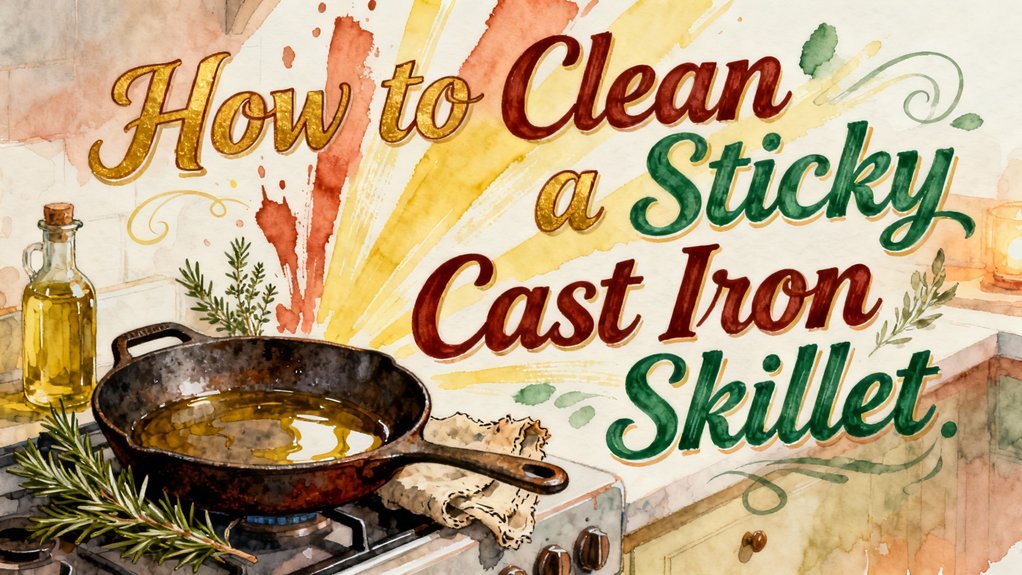
You can restore your sticky cast iron skillet by scrubbing it with hot soapy water to remove excess oil buildup, then drying it thoroughly with a lint-free cloth. Apply a thin layer of oil—about quarter-sized—and buff away excess with a paper towel until you achieve a non-tacky sheen. Heat the pan on the stovetop until it lightly smokes to guarantee proper polymerization. Use high smoke-point oils like vegetable or canola for best results. Understanding what causes stickiness will help you prevent it permanently.
Causes of Stickiness
A sticky cast iron skillet rarely results from a defective pan—it’s almost always a seasoning or cooking problem you can fix.
Your sticky residue likely stems from excessive oil application during seasoning. When you apply too much oil, you create buildup that prevents proper polymerization, leaving a gummy texture on your surface. Thick layers form slick puddles rather than bonding evenly with the iron. To avoid this, start with minimal oil to prevent excessive accumulation on your skillet’s surface.
Insufficient heat during seasoning compounds this issue. If you don’t preheat your oven adequately or maintain high temperatures throughout the process, the oil remains unpolymerized and sticky instead of forming a hard protective layer. Using high smoke point oils like vegetable oil, canola oil, or Crisco shortening ensures better polymerization and a more durable seasoning layer. For applications like steam generation in cooking, cast iron heat retention makes it an excellent vessel for maintaining the hot environment needed. Dutch ovens offer similar heat retention benefits, making them ideal for campfire cooking desserts that require consistent temperatures. After seasoning, apply a light coat of oil after cleaning to maintain the seasoning layer. This approach builds a resilient, non-stick layer that improves with use over time and protects against rust.
Additionally, improper technique—such as failing to apply thin, even coats or seasoning over unclean surfaces—traps sticky residue. You may also be using an oil that doesn’t polymerize effectively. Finally, cooking temperature errors, like insufficient preheating or inadequate oil in your pan during cooking, contribute greatly to stickiness. Proper cooking temperatures are crucial to prevent sticking and ensure food releases naturally from your cast iron surface.
Quick Tests to Identify Tacky Vs Properly Seasoned
Before you attempt to restore your cast iron skillet, you’ll need to determine whether you’re actually dealing with tackiness or simply viewing properly seasoned cookware. Conduct straightforward tackiness tests to distinguish between the two conditions using reliable seasoning indicators.
Apply the water-sizzle test: droplets should skitter and evaporate rapidly on properly seasoned iron. Next, perform the touch-after-heating check—a cooled surface should feel slick and dry, not sticky. Use the paper-towel wipe: buffing should reveal smooth dryness rather than oily residue. Sticky residue often indicates that thick coats of oil were applied during the seasoning process, which prevents proper polymerization. One hour at 400 degrees may leave your skillet feeling tacky, so two hours at 400 degrees is necessary for achieving a non-sticky, well-adhered finish. Similar to how extended cooking times in a Dutch oven develop deeper flavor, longer seasoning periods allow the oil to fully bond with the cast iron surface. Just as preheating on medium heat ensures even heat distribution in Dutch oven cooking, proper seasoning requires consistent temperature maintenance for optimal results. The heat retention properties of cast iron make it ideal for achieving this consistent temperature throughout the seasoning process. After seasoning, dry thoroughly with a towel to prevent any excess oil from creating a tacky surface. For additional maintenance, use kosher salt as a gentle abrasive to remove any remaining debris and impurities from the surface.
For mechanical verification, drag a stainless spatula across the cooled surface; it should glide smoothly without dragging excess oil. Finally, conduct a brief frying test using an egg or potato; easy release confirms proper seasoning, while sticking indicates tackiness requiring remediation.
Immediate Cleaning Steps for Mild Stickiness
Once you’ve confirmed your skillet’s stickiness through the tests outlined above, you’ll want to address mild cases promptly with straightforward cleaning techniques. Start with immediate solutions using hot soapy water and effective scrubbing to eliminate excess oil buildup. Apply dish soap sparingly to avoid stripping your seasoning layer, then scrub the surface thoroughly with a stiff bristle brush to remove sticky residue. Rinse completely afterward.
Next, dry your skillet meticulously. Wipe all water residue immediately with a clean, lint-free cloth, then heat it on your stovetop to evaporate remaining moisture. This prevents new stickiness from trapped water. For best results, clean while the skillet is still warm to make debris removal easier and more effective. To further protect your skillet’s surface, consider using non-abrasive tools like wooden utensils when cleaning to prevent damage to the seasoning. Apply a thin oil layer to the entire surface, ensuring it doesn’t run or drip. Rub away excess oil with a paper towel until you achieve a smooth, non-tacky sheen, completing the restoration process effectively. Remember that excess oil usage leads to a gummy residue, so using only a quarter-sized amount is essential for maintaining proper seasoning. For stubborn rust spots that develop over time, short vinegar soaks of around 40 minutes can effectively dissolve rust without causing surface damage. Once your skillet is completely dry, heat it on the stove until it begins lightly smoking to ensure any remaining moisture is evaporated and the oil is properly bonded to the surface. Gradually heating your skillet on low heat before cooking helps ensure even heat distribution and prevents the sticky buildup that can result from temperature spikes.
Restoration Steps for Heavy Gummy or Sticky Buildup
When mild cleaning methods don’t resolve the problem, you’ll need to tackle heavy gummy or sticky buildup with more aggressive restoration techniques.
Start with mechanical removal using coarse abrasives like steel wool or 60–120 grit sandpaper to physically strip polymerized oil and carbonized deposits. For localized heavy buildup, rotary tools with abrasive discs work effectively on durable pieces—just control speed and pressure carefully to avoid metal damage.
Complement mechanical work with chemical stripping. Apply oven cleaner or commercial degreasers to soften stubborn films, then rinse thoroughly. For additional softening, use concentrated dish soap and hot water with repeated scrubbing. For particularly stubborn buildup, vinegar spray solution can help dissolve residual deposits and prepare the surface for further cleaning.
Thermal techniques also help: heat your skillet at 400–500°F for 45–60 minutes to harden excess oil for easier removal. Combine approaches by heating the pan, adding coarse kosher salt, and scrubbing with an abrasive pad to dislodge gummy layers without harsh chemicals. Building multiple thin layers through repeated baking cycles creates a more durable, nonstick seasoning layer than a single thick application. After the surface is completely dry, the seasoning process restores the protective layer and prevents rust formation. Always dry completely and apply protective oil immediately after stripping. After restoration is complete, oil application helps maintain the seasoning layer and prevents future buildup problems.
Preventive Maintenance to Avoid Future Stickiness
Since sticky buildup develops gradually from improper seasoning, heat management, and cleaning habits, you’ll find that prevention requires attention to technique at every stage of your skillet’s use. Establish consistent preventive cleaning immediately after cooking—wipe away excess fat while the pan’s warm to prevent concentrated residues from solidifying into sticky patches. Use high-smoke-point seasoning oils during maintenance, applying only thin, even coats that fully polymerize at 450–500°F. Preheat your skillet thoroughly before cooking and maintain medium heat to avoid oil breakdown. After each use, dry your pan completely with towels, then heat it briefly on the stovetop to eliminate all moisture. Heating the skillet over medium heat can reduce stickiness from any oil residue that may have accumulated. Just as Dutch ovens benefit from gradual heat-up to prevent damage, cast iron skillets should also be heated gradually to protect their seasoning layers, which create a protective barrier that prevents rust and excessive buildup. Restoring a damaged seasoning layer requires removing rust through scrubbing and reseasoning the skillet to maintain its nonstick qualities. Washing your pan with warm water and a brush after cooking removes food debris while preserving the seasoning buildup that develops over time. These disciplined habits stop sticky accumulation before it starts, preserving your skillet’s performance long-term.
Common Misconceptions About Cast Iron Care
Why do cast iron care myths persist so stubbornly? Outdated beliefs about cleaning myths and care misconceptions often stem from historical practices with harsh lye-based soaps that genuinely damaged seasoning. Today’s mild dish soaps won’t strip your properly seasoned pan—repeated aggressive scrubbing causes wear, not soap itself.
You’ll encounter myths claiming cast iron must never see a dishwasher or that seasoning creates Teflon-like nonstickness. While dishwashers aren’t recommended due to rust risk, occasional hand washing with soap followed by thorough drying and light oiling protects your pan. Seasoning produces near-nonstick performance, not permanent perfection, requiring proper preheating and adequate fat. The polymerization creates a protective layer that prevents rust and enables this nonstick quality when properly maintained. For best results, use light olive oil for seasoning due to its higher smoke point, which prevents burning during the conditioning process. The seasoning process requires heating oil to its smoke point so it bonds chemically with the cast iron, forming a durable protective layer. Similar to how water displacement methods work in sous vide cooking by removing air to create optimal cooking conditions, proper seasoning in cast iron requires eliminating moisture to achieve the best protective layer. Cast iron excels in heat retention rather than even heat distribution across the cooking surface. Properly seasoned cast iron is essential for Dutch oven cooking, where reliable heat performance ensures dishes like turkey and stuffing meatballs or honey glazed carrots cook evenly. Additionally, applying oil after cleaning helps maintain and build up the seasoning over time.
Understanding these care misconceptions prevents unnecessary restrictions and helps you maintain your cast iron effectively through flexible, scientifically-informed practices.
Advanced Tips for Optimal Seasoning
Moving beyond basic maintenance, you’ll achieve superior seasoning results by mastering three critical variables: oil selection, temperature protocol, and application technique.
Select drying oils like flaxseed for hardness, or high smoke-point oils like grapeseed for forgiving, stable layers. Pre-dry your pan at 200°F to open surface pores, then bake at 450–500°F for one hour to drive polymerization techniques that create durable coatings. Heating the oiled pan until it begins to smoke allows the oil to penetrate and polymerize into a resilient non-stick layer. Regular cooking usage with bacon grease provides additional seasoning benefits that enhance the overall maintenance of your cast iron cookware. Avoid butter for seasoning due to its low smoke point, which causes it to burn and smoke quickly when applied to heated cast iron. Traditional fats like lard offer exceptional seasoning durability and reliability, though they may impart odors if cookware is stored for extended periods. Each use with oil or fat adds another seasoning layer that interlocks to create a well-seasoned surface over time. A well-seasoned skillet requires proper maintenance to prevent the polymerized oil seasoning layer from breaking down over time. After cleaning, always apply a thin layer of oil] to the cooking surface to maintain your skillet’s seasoning and prevent rust.
Apply seasoning oils in extremely thin layers—wiping nearly all oil away before baking prevents pooling and uneven buildup. Execute multiple thin coats sequentially rather than single heavy applications; three to six incremental cycles yield superior uniformity and sheen. Position your pan upside down with foil underneath, then allow slow in-oven cooling to cure layers consistently and maximize adhesion.
When to Perform a Full Strip and Reseason
Your cast iron skillet will eventually show signs that it’s time for a complete strip and reseason—and recognizing these seasoning indicators is essential to maintaining ideal cooking performance.
You’ll notice uneven cooking surfaces, sticky residue, rust spots, or a light grey discoloration signaling the need for intervention. Test your skillet’s nonstick properties by cooking eggs; failure indicates stripping is necessary. Polymerization occurs when oil reaches its smoke point, creating a protective coating that deteriorates over time and requires restoration. Like a Dutch oven used for cooking pot pie, cast iron cookware benefits from proper maintenance to preserve its nonstick cooking surface.
Strip frequency depends on usage patterns rather than calendar schedules. Heavily used skillets require full treatment every 6-12 months, while occasional use warrants fewer treatments yearly. Acidic foods, high-heat cooking, and neglected cleaning accelerate seasoning degradation and demand immediate attention. Cast iron is durable and forgiving with proper care, so don’t stress if your skillet needs maintenance. Proper storage practices, similar to extended shelf life preservation techniques, help maintain your cast iron’s condition between uses.
Base your strip frequency on visual inspection and cooking performance. This approach prevents unnecessary over-seasoning while ensuring your skillet maintains optimal nonstick characteristics and cooking reliability.
Troubleshooting Your Cast Iron Care Routine
Your seasoning frequency directly impacts stickiness. If you’re applying oil too heavily or too often, you’re creating buildup rather than a protective layer. Apply thin coats sparingly, wiping away excess with paper towels. Solid vegetable oil is recommended for seasoning to avoid pooling issues that contribute to sticky buildup.
Your cleaning tools matter greatly. Using harsh abrasives strips seasoning and damages the surface. Instead, opt for nylon pads, soft sponges, or chain mail scrubbers that remove stuck food without compromising your skillet’s integrity. Never place cast iron cookware in the dishwasher due to high heat and harsh detergents that accelerate wear and damage the seasoning. For heavily soiled cookware, steel wool and sandpaper offer effective alternatives when standard scrubbing methods prove insufficient, though chemical strippers like lye-based cleaners can dissolve stubborn buildup when mechanical methods are inadequate.
Drying improperly invites rust. Wipe your pan completely with kitchen towels immediately after washing, focusing on edges and the rim. Insufficient drying leaves moisture that oxidizes the iron. The polymerized oil layer created through proper seasoning acts as your skillet’s primary defense against rust and sticking issues. Apply a light oil coating post-drying to maintain your seasoning and prevent sticking. Just as proper temperature control is essential when cooking to ensure food safety, maintaining proper drying techniques is critical for preventing rust and extending your cast iron’s lifespan. Consider organizing your cast iron care routine with the same attention to detail you would give to packing organization for optimal results.