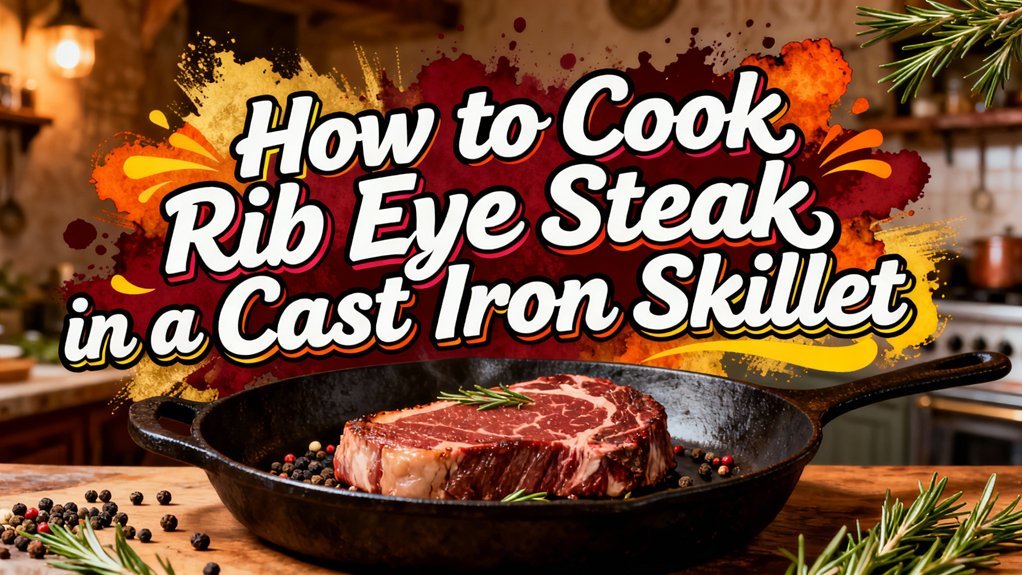
You’ll sear your 1–1.5 inch ribeye in a preheated cast iron skillet at 450–500°F for two minutes per side. Once you’ve achieved a golden crust, introduce 3–4 tablespoons of salted butter, garlic, and herbs like rosemary and thyme. For thicker cuts, transfer the skillet to a 375°F oven until reaching your target internal temperature. Let it rest 8–15 minutes before slicing. Mastering the fat-cap rendering and precise temperature control elevates this technique considerably.
Selecting and Preparing Your Ribeye Steaks
What separates a mediocre ribeye from an exceptional one? Your ribeye selection begins with marbling assessment—look for white intramuscular fat distributed throughout the deep-red muscle, which melts during cooking and delivers superior flavor and juiciness. USDA Prime and Choice grades offer ideal marbling; Select cuts are leaner but less forgiving.
Examine the color and surface carefully. Vibrant deep-red indicates freshness; avoid brown or gray discoloration. Choose steaks 1–1.5 inches thick for skillet cooking, targeting 10–12 oz per person. Inspect the fat cap for evenness and intermuscular fat distribution, sidestepping large gristle seams that create tough sections. Prime-grade beef represents the pinnacle of quality with abundant marbling that creates a gourmet experience unmatched by lower grades. For the ultimate selection, consider seeking out grass-fed Wagyu from premium sources that ensure superior flavor and ethical sourcing.
Before cooking, pat your steaks dry thoroughly with paper towels. This removes surface moisture that inhibits browning and promotes ideal Maillard reaction in your cast iron, which is essential for achieving the superior sear and crust that cast iron skillets are known for. Proper moisture removal is as critical to steak preparation as pre-freezing is to preserving delicate foods, ensuring optimal texture and browning results.
Essential Equipment and Pan Setup
Now that you’ve selected and prepped your steaks, the right equipment makes the difference between a mediocre sear and a perfect crust. A 10–12-inch cast iron skillet is your ideal choice—its thermal mass retains heat when you add the steak, ensuring an even, restaurant-quality crust. Bare-seasoned cast iron offers superior nonstick properties and higher smoke tolerance than enameled alternatives. The skillet’s heat retention capabilities are essential for maintaining consistent cooking temperatures throughout the searing process.
Pair your skillet with a high-output gas or electric burner capable of sustaining temperatures near the smoke point. For pan maintenance, keep a stiff silicone or metal spatula and chain-mail brush handy; these tools manage fond and stuck bits without compromising your seasoning. Avoid using butter for the initial sear to prevent burning, as butter burns easily at the high temperatures required for a proper crust. Refrigerated steaks from the fridge yield a better sear with less risk of overcooking.
Position a powerful range hood overhead—searing produces significant smoke. Have your instant-read thermometer ready for doneness checks, and if finishing in the oven, verify your skillet’s oven-safe rating.
Preheating Your Cast Iron Skillet
Since cast iron’s thermal mass is its greatest asset, you’ll want to build heat gradually to avoid warping while ensuring an evenly heated surface. Start on medium heat for a few minutes, then increase to medium-high and maintain this setting for approximately 10 minutes. Match your burner size to your skillet for uniform heat distribution.
Test surface temperature readiness by dropping water onto the cast iron. Beads that dance and jump across the pan indicate you’ve reached peak searing temperature. If water pools or evaporates immediately, continue preheating. A hot handle mitt is essential for safety when handling the preheated skillet. Using high smoke point oil will help prevent sticking and contribute to even cooking of your steak. Remember that gradual heating on low heat ensures even heat distribution and prevents thermal shock. This gradual process minimizes thermal shock and creates the perfect conditions for developing a flavorful crust on your rib eye while maintaining the seasoning integrity of your cast iron investment.
Seasoning and Temperature Control
Two fundamental elements—salt and pepper—transform your preheated skillet into an instrument for building a magnificent crust. Apply coarse kosher salt generously—about ¾–1 teaspoon per 8–12 ounces—to guarantee predictable crystal distribution and highlight beef’s natural flavor.
You’ll benefit from dry brining by salting 40–60 minutes ahead, which improves internal seasoning and moisture retention. Pat your steak dry before searing to enable rapid Maillard reaction. This even heat distribution from your cast iron skillet ensures the Maillard reaction develops uniformly across the entire surface, creating the perfect crust that enhances the well-marbled ribeye’s natural flavors. Cast iron’s natural seasoning develops over time, improving non-stick properties and ensuring consistent browning for superior results. Proper seasoning techniques build and maintain the skillet’s protective coating, which is essential for achieving the best results with premium cuts like ribeye. For optimal results, allow your skillet to preheat for 10 minutes to achieve consistent temperature control throughout the cooking process. Like campfire cooking methods that rely on charcoal placement to regulate heat distribution, cast iron requires strategic preheating to maintain even temperatures. An instant thermometer is essential for monitoring your steak’s internal temperature and determining the precise moment it reaches medium rare doneness at 125 degrees Fahrenheit. Cast iron skillets are suitable for use on various heat sources including gas, electric, and open flames, providing flexibility in how you control your cooking temperature.
For pepper application, use freshly cracked black pepper applied just before searing to preserve its aroma while preventing burnt, bitter notes. Keep seasoning minimal; salt and pepper alone let your ribeye’s marbling dominate.
Maintain pan temperature around 450°F during searing. Once you flip the steak, reduce heat slightly and introduce butter with smashed garlic and fresh herbs for finishing touches.
Achieving the Perfect Sear
A properly preheated cast-iron skillet is your foundation for developing the golden, caramelized crust that defines an exceptional ribeye. Heat your skillet over high heat until it’s smoking, reaching 450°F to 500°F for ideal searing techniques. Cast iron’s superior heat retention allows you to maintain these high temperatures consistently throughout the cooking process.
Once ready, lay your steak away from your body to prevent splattering. Sear for two minutes per side, then thirty seconds on the edges. For superior crust development, flip every thirty seconds—this frequent movement builds an even, consistent sear while preventing sticking. For an additional professional-level finish, consider using a kitchen torch for charring the exterior after your initial pan sear to enhance the smoky flavor and crust complexity.
After your initial sear, add butter, rosemary, and garlic. Tilt the pan and baste continuously while flipping on medium-low heat. This technique enriches the crust while keeping your steak tender inside. Using an instant-read thermometer throughout the cooking process helps you achieve the exact doneness you desire. Just as oxidation protection is crucial for preserving food quality over time, searing your steak quickly prevents moisture loss and maintains optimal texture. Proper skillet maintenance, including seasoning and cleaning cast iron regularly, ensures your pan continues to perform optimally for future cooking. Remove when it reaches 125°F internally for medium-rare perfection. Allow the steak to rest for several minutes after cooking, as this resting period redistributes juices throughout the meat and ensures optimal tenderness and flavor.
Rendering the Fat Cap
With your crust now golden and your steak nearly at temperature, you’ll want to render the fat cap—that thick band of saturated and unsaturated triglycerides running along the ribeye’s edge. Using trimming strategies, score the cap in a shallow crosshatch to increase surface area and prevent curling. Position your steak on the pan’s edge, tilting it onto the fat with steady tongs pressure. Maintain medium-high heat for 3–6 minutes depending on thickness. Watch for visual cues: the fat shifts from opaque to translucent, then golden-brown as it liquefies. Touch the cap occasionally—rendered fat becomes pliable rather than rigid. For optimal results, monitor the fat as it transitions from rigid to pliable and translucent, indicating proper rendering has occurred. This fat cap anatomy technique amplifies browning and self-bastes your meat, intensifying flavor development throughout the final cook. After rendering, allow your steak to rest for several minutes to let the juices redistribute before serving. The rendered fat can be strained and stored in an airtight jar in the refrigerator for up to three months, allowing you to use it for future cooking applications. Consider using high-smoke-point fats like the ghee or avocado oil you initially seared with to maintain consistency in your rendered fat collection. Finishing with herb butter basting during the rendered fat stage adds richness and depth to enhance your steak’s flavor profile.
Butter Basting and Aromatics
Once your steak reaches approximately 100°F internally, you’ll introduce butter to elevate both flavor and crust development. Add 3-4 tablespoons of quality salted butter after your initial searing, timing it 20-30°F below your target doneness to prevent burning.
Tilt your pan toward the handle to pool the foaming butter, then baste both sides repeatedly using a tablespoon. Flip every 30 seconds until you’re 5°F from your desired temperature. Use an infrared thermometer held perpendicular to the steak’s surface at close range to monitor internal temperature accurately without piercing the meat. Proper preheating of your cast iron skillet ensures even cooking temperature distribution across the surface, which is essential for achieving consistent results. Allow your cast iron to cool before cleaning to avoid thermal shock and potential enamel damage.
Maximize aromatic infusion by incorporating smashed garlic cloves, fresh rosemary sprigs, and thyme into the basting liquid. These ingredients infuse complex nutty flavors into your steak’s surface. For optimal results, ensure your fresh herbs are added before the butter begins to brown to prevent burning. Consider using a culinary torch to finish the steak’s surface with additional caramelization and depth of flavor. For extended storage of your finished steak, vacuum sealer bags can help preserve freshness and prevent freezer burn if you plan to save leftovers.
The butter benefits extend beyond taste—browning develops a superior crust through the Maillard reaction. Rest your steak at least 10 minutes before serving to lock in these flavors and allow the juices to redistribute throughout the meat.
Oven Finishing for Thick Cuts
For ribeye steaks 1.5 inches or thicker, finishing in a preheated oven guarantees even cooking throughout without sacrificing the crust you’ve developed on the stovetop. After searing two minutes per side, transfer your skillet immediately to a 375°F oven. This temperature preserves your crust while allowing the interior to cook uniformly. Using a meat thermometer will help you verify the internal temperature has reached your target doneness level. To maintain your skillet’s cooking performance, ensure it’s properly seasoned beforehand, as multiple rounds of seasoning the cast iron creates a superior nonstick surface for searing.
Your cooking times depend on desired doneness. For medium-rare, bake five to seven minutes. If you’re targeting medium, extend to seven to ten minutes. These oven techniques prevent the exterior from overcooking while the center reaches proper temperature. Like mindfulness enhancing everyday experiences, paying close attention to your steak during cooking transforms a simple meal into a moment of culinary appreciation. Basting with butter and herbs during the final stage on the stovetop before transferring to the oven adds richness and depth to your finished dish. Checking response time accuracy ensures your thermometer provides reliable readings for consistent results.
Monitor your steak’s internal state closely. If it’s slightly underdone when you remove it, rest it an additional minute in the off oven. For longer-term storage of leftover steak, consider vacuum sealing frozen portions to extend shelf life and maintain quality. Like a properly preheated Dutch oven, a well-maintained cast iron skillet with sufficient heat and seasoning prevents sticking and produces superior cooking results. This adjustment affirms perfect results every time without drying thick cuts.
Target Temperatures and Carryover Cooking
How do you know when your ribeye’s reached perfect doneness? You’ll rely on target temperatures and understanding carryover cooking‘s essential role.
Remove your steak at 125°F for medium-rare or 130°F for medium. Don’t wait until it reaches your final temperature in the skillet—that’s where carryover cooking enters. As your ribeye rests on a wire rack, residual heat continues cooking the interior, raising the temperature 3–5°F additional degrees.
This strategic pull prevents overcooking while redistributing juices throughout the meat. A meat thermometer eliminates guesswork, especially until you’ve mastered cast iron’s behavior. Similar to how even heat distribution is crucial for searing fish, proper temperature control ensures your steak develops an ideal crust. Check internal temperature after 4–5 minutes per side on high heat, adjusting for your steak’s thickness and stove intensity. This precision guarantees perfectly tender, juicy results every time.
Resting and Serving Your Steak
After you’ve pulled your ribeye from the heat, the resting phase becomes just as critical as the cooking itself. For a 1.5–2 inch steak, allow 8–15 minutes rest duration to redistribute intramuscular juices and equalize temperature. Loosely tent with foil or elevate on a wire rack to retain heat while preventing steam buildup that softens your crust.
Your slicing technique determines the final eating experience. Once rested, slice against the grain at ¼–½ inch thickness using a sharp knife, which reduces tearing and juice loss. This perpendicular cut shortens muscle fibers, yielding tenderness without sacrificing beef’s characteristic bite. For those preferring alternative cooking methods, Dutch oven cooking offers another approach to preparing beef dishes that maintain similar moisture retention benefits. The heat retention properties of cast iron and similar vessels allow for consistent cooking temperatures throughout the resting and serving process. Like traditional stews, slow cooking methods allow aromatics and herbs to infuse the meat with complex flavors over extended cooking times. A fitted lid enables faster cooking times while maintaining the moisture and tenderness essential to a perfectly rested steak.
Collect juices on your cutting board and return them to the plated steak as finishing jus, enhancing perceived juiciness and preserving the moisture retention you’ve carefully preserved throughout cooking and resting. While cast iron skillet cooking delivers excellent results through direct heat, precision temperature control methods like sous vide offer an alternative approach to achieving perfect doneness consistency for those seeking additional cooking options.