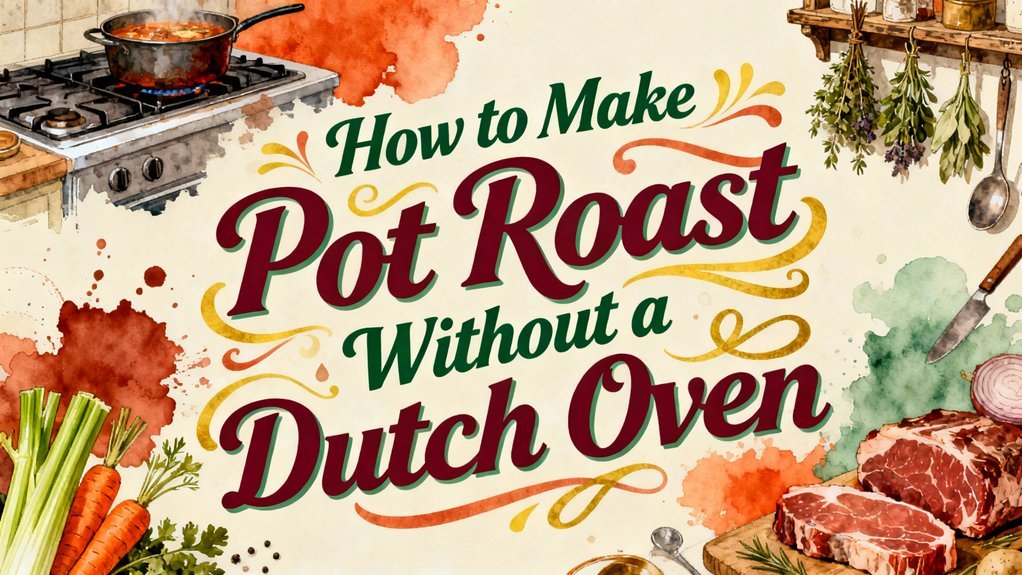
You’ll achieve restaurant-quality pot roast using a heavy-bottomed skillet, cast-iron pan, or oven-safe casserole dish. Start by patting your 3–4 pound chuck roast dry, then sear all surfaces in high-heat oil for 2–5 minutes per side. Deglaze the pan with red wine or beef stock, add aromatics and herbs, then braise covered in a 275–325°F oven for 3–4 hours until the internal temperature reaches 195–205°F. The right technique transforms any oven-safe vessel into an exceptional braising vessel.
Equipment Alternatives to Dutch Oven
You don’t need a Dutch oven to braise a perfect pot roast—several kitchen essentials will do the job just as well. A 10–12 inch heavy stainless steel or cast-iron skillet excels for searing and braising when you employ proper skillet techniques. Choose an oven-safe model to transfer directly from stovetop to oven at 250–325°F. Cover tightly with heavy-duty aluminum foil to trap steam and retain moisture during extended cooking. Like Dutch ovens, cast-iron skillets offer superior heat retention that ensures consistent cooking temperatures throughout the braising process. Cast iron’s pre-seasoned surface improves with use, making it an excellent long-term investment for home cooks.
For larger roasts, sear in your skillet, then transfer to a deep roasting pan with roasting adaptations like tight-fitting lids. Maintain at least 2–3 inches of clearance around the meat for even heat circulation. You can also create steam using steam-generating techniques such as placing a pan of water or ice cubes in a hot skillet to achieve similar moisture retention results. Many recipes enhance the braising liquid by mixing in onion soup mix along with beef broth for added depth of flavor. Alternatively, a slow cooker delivers hands-off results: sear beforehand, then braise 6–8 hours on low. An electric pressure cooker dramatically reduces time to 45–60 minutes at high pressure. To verify your pot roast reaches the ideal level of doneness, use an affordable meat thermometer to monitor the internal temperature during cooking. For optimal tenderness, aim for an internal meat temperature of 195-205 degrees Fahrenheit before serving. Store any leftovers in an airtight container in the refrigerator for 3-5 days to enjoy your pot roast throughout the week.
Choosing the Right Cut and Size of Beef
The success of your pot roast hinges on selecting a cut with sufficient marbling and connective tissue to transform into tender, flavorful meat through extended braising. Chuck roast remains your ideal choice, offering high intramuscular fat and abundant collagen that converts to gelatin during slow cooking. Brisket and arm roast serve as excellent alternatives, each providing comparable texture benefits.
For cut characteristics, prioritize roasts weighing 3–4 pounds to guarantee even cooking in alternative vessels like slow cookers or covered skillets. Thicker cuts exceeding three inches demand extended braising time. Follow portion guidelines of ¾–1 pound raw per adult when planning your roast size. Leave moderate external fat for self-basting, removing only excessive trim that creates unpalatable slickness during searing. Just as caramelized toppings require careful preparation to achieve the best results, your pot roast’s success depends on proper technique and patience. The braising liquid you choose, whether incorporating red wine and beef broth or other flavorful combinations, will infuse the meat with depth and richness throughout the slow cooking process. These hearty braising methods work similarly to Dutch oven ground beef recipes that transform tougher cuts into tender, flavorful meals. The connective tissue in these tougher cuts requires the low and slow cooking method to break down properly and achieve that desired tender texture. You can use an infrared thermometer to verify that your pot roast has reached the proper internal temperature for safe consumption. Deglazing your cooking vessel with beef stock or wine after searing will lift the browned bits and create a flavorful foundation for your braising liquid.
Browning, Deglazing, and Flavor Foundations
Searing your roast properly sets the foundation for deep, complex flavors that define an exceptional pot roast. Pat your meat dry before heating a heavy-bottomed skillet with high-smoke-point oil until it’s fully heated. Sear all exposed surfaces for 2–5 minutes per side, working in batches to avoid crowding, which causes steaming rather than browning.
Your browning techniques activate the Maillard reaction—the chemical process between amino acids and sugars that creates complex flavor compounds and brown pigments above 140°C. After searing, immediately deglaze the hot pan with ½ to 1 cup red wine or beef stock, scraping up fond (browned bits) that concentrate flavor. Briefly boil the deglazed liquid to dissolve stuck-on compounds, then add your braising liquid. You can also add aromatic vegetables like garlic and onions to further enhance the depth of your braising liquid. A heavy-bottomed skillet retains heat effectively to ensure consistent browning and moisture retention throughout the cooking process, much like how cast iron maintains a consistent high temperature during cooking. For convenience, consider using alternative cooking methods like slow cookers or pressure cookers if you prefer hands-off preparation. Braising allows your ingredients to develop rich, layered tastes through prolonged, gentle heating. For optimal results, allow the braised roast and vegetables to cook low and slow until completely tender. This flavor development stage transforms a simple roast into something extraordinary, and patience in the cooking process ensures optimal tenderness that defines a truly exceptional pot roast.
Oven-Baked Braising Method
Once you’ve built your flavor foundation through searing and deglazing, transferring your braise to the oven creates an environment where gentle, consistent heat breaks down collagen without requiring stovetop monitoring. Select oven safe pans with at least 2–3 inch sides and tight-fitting lids rated for 275–325°F. Cover with heavy-duty foil or a baking sheet if needed to seal moisture effectively. Position your roast so braising liquid reaches halfway up its sides, allowing partial submersion. Braise at 275°F for very low cooks (3 hours) or 325°F for standard 3–4 hour braises depending on roast size. Check tenderness at the 3-hour mark, then continue in 15–30 minute increments. Your braising techniques succeed when fork-tender texture indicates collagen’s complete conversion to gelatin. For optimal results, avoid sudden temperature changes between your searing step and oven braising to prevent damage to your cookware. Consider using cast iron skillets with historical durability to ensure your cookware withstands repeated high-heat cooking cycles. Heavy-duty alternatives like carbon steel or heavy anodized nonstick pans conduct heat effectively and can produce similarly excellent braising results. Maintaining a clear line of sight to your oven window and keeping your cookware clean will help you consistently achieve reliable results. This oven-braised method allows you to socialize and prepare other dishes while the roast cooks itself without requiring constant attention. The technique cannot be rushed, as the extended cooking time is essential for achieving the tender, juicy results that make pot roast a crowd-pleasing dish, similar to the success achieved through Dutch oven braising methods with chicken and vegetables.
Slow Cooker and Stovetop Options
If you’re seeking a hands-off approach that doesn’t require oven space, a slow cooker delivers fork-tender pot roast through gentle, extended heat. Season your beef chuck roast with salt and pepper, then sear it 3-4 minutes per side in a hot skillet with olive oil for ideal crust formation. Layer sliced onions in your slow cooker’s bottom, nestle the seared roast atop them, and arrange potatoes and carrots around it. Whisk together beef broth, tomato paste, Worcestershire sauce, and cornstarch, then pour this mixture over your vegetables. Cook covered on Low for 8 hours or High for 5 hours until the meat shreds easily with forks. The beef chuck roast provides approximately 22 grams of quality protein per 3-ounce serving, making this slow cooker method an excellent option for meeting daily nutritional needs. For dessert after your meal, consider preparing cast iron Dutch oven desserts like berry crumble or s’mores cake over your campfire.
Alternatively, stovetop methods involve sautéing aromatics before combining ingredients in your slow cooker, building deeper flavor foundations. Browning meat through caramelization adds significant flavor depth to your final dish, making this optional step worthwhile for enhanced results. Properly sealing your ingredients with airtight storage techniques ensures your pot roast maintains optimal moisture and flavor throughout the cooking process. You can also display and store your cast iron cookware using creative hanging solutions to keep your kitchen organized while showcasing your cookware collection.
Instant Pot and Pressure Cooker Technique
For those prioritizing speed over the slow cooker’s extended timeline, an Instant Pot or pressure cooker can deliver equally tender pot roast in roughly an hour. You’ll sear your seasoned chuck roast on the sauté setting until browned on all sides, then build flavor infusion by cooking diced onions, garlic, and herbs before deglazing with red wine and beef broth. Ideal cuts like chuck, round roast, or brisket are generally cheaper while maintaining their flavor through pressure cooking.
Return the roast to the pot and set to manual high pressure for 60-90 minutes, depending on size. A 3-pound roast typically requires 75 minutes. After pressure cooking, allow a natural release for at least 25 minutes to guarantee tenderness. You can then add vegetables for a final 4-10 minute pressure cycle, creating a complete one-pot meal with minimal cleanup.
Vegetables, Timing, and Flavor Additions
After your roast has browned and you’ve built an aromatic base with onions and garlic, you’ll layer in vegetables and seasonings that transform the braising liquid into a rich, deeply flavored sauce. Select Yukon gold potatoes and whole carrots for ideal texture variations—add potatoes initially, then carrots after two hours to prevent mushiness.
Enhance your flavor profiles by stirring tomato paste, Worcestershire sauce, and aromatic herbs like rosemary and thyme into beef broth. Red wine offers optional depth. Dry onion soup mix provides convenient seasoning. The heavy construction and tight-fitting lid of a Dutch oven creates the perfect environment for even heat distribution and moisture retention. For best results, use a Dutch oven or heavy-bottomed pot to ensure even heat distribution throughout the cooking process. The roast reaches ideal tenderness when the internal temperature reaches 202°F (94°C), ensuring the meat pulls apart easily and absorbs all the savory braising flavors.
Cooking times depend on your method: oven-braise at 275°F for three to four hours, or use a slow cooker for four hours on high or eight hours on low. These ingredient substitutions and vegetable combinations guarantee fall-apart tenderness and complex, savory depth throughout your pot roast.
Finishing, Sauce Thickening, and Serving
Now that your vegetables have softened and your braising liquid‘s transformed into a flavorful foundation, you’re ready to finish your pot roast with precision. Rest the roast 20–30 minutes tented with foil, then slice against the grain into quarter-inch to half-inch pieces for ideal tenderness. Pour reserved braising liquid over sliced meat immediately to maintain moisture. For added richness, stir in a tablespoon of butter before serving to enhance the overall flavor profile.
For sauce balancing, strain solids through fine mesh, then degrease by skimming fat or refrigerating until it solidifies. Thicken using reduction, roux, slurry, or beurre manié depending on your preferred consistency. Adjust acidity with vinegar or lemon juice in half-teaspoon increments. Correct seasoning with salt and pepper to taste. For enhanced depth of flavor, incorporate Worcestershire sauce into your sauce for a more complex taste profile.
For meat presentation, arrange sliced roast over mashed potatoes or noodles, serving sauce separately in a warmed gravy boat. A 5.5-quart capacity provides ample room for braising pot roasts without being overly cumbersome in most kitchens. Leftover pot roast can be stored using vacuum seal bags to extend its refrigerator shelf life and maintain quality. When using vacuum sealing, ensure the braising liquid is cooled before sealing to prevent condensation and preserve the meat’s texture. Vacuum sealing can extend food freshness significantly when properly executed with cooled liquids. Removing oxygen during the vacuum sealing process inhibits bacterial growth and reduces oxidation. Garnish with fresh parsley and accompany with roasted greens for textural contrast.