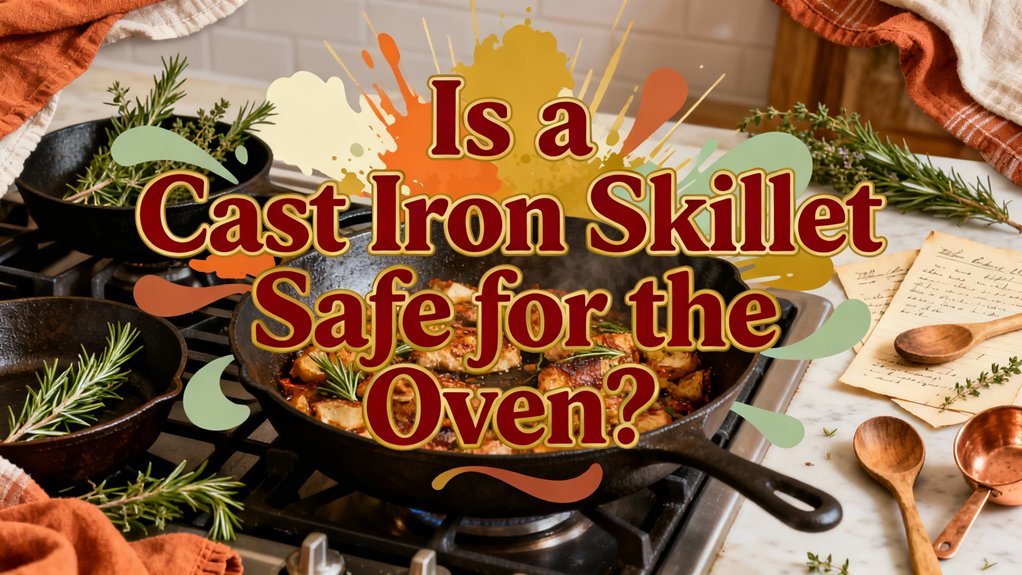
Yes, you can safely use your cast iron skillet in the oven. Pre-seasoned cast iron tolerates temperatures up to 500°F, while enameled varieties max out at 400°F—though premium brands may handle 500°F. Always use oven mitts to protect yourself, as handles retain significant heat. Avoid thermal shock by preheating gradually and allowing the skillet to cool naturally. These temperature limits preserve your seasoning and prevent damage. For ideal results across various cooking methods, there’s much more you should know.
Understanding Cast Iron Oven Safety
Because cast iron conducts and distributes heat uniformly across its cooking surface, you can confidently move it from stovetop to oven without worrying about uneven cooking or hot spots. The material’s thermal mass retains heat effectively during shifts between cooking methods, enabling you to execute recipes requiring different temperature zones seamlessly.
Cast iron’s durability directly supports cookware longevity when you follow proper care protocols. Seasoned cast iron maintains structural integrity at elevated temperatures without degradation, while enameled varieties eliminate rusting concerns entirely. The cast iron stability you’ll experience comes from material composition that remains chemically stable under standard oven temperatures, containing no harmful coatings like PFOA or PTFE that degrade with heat. Just as food preservation accessories require proper storage techniques to extend longevity, cast iron benefits from consistent maintenance routines. The natural non-stick surface that develops with seasoning improves over time and enhances cooking results. Cast iron cookware can safely withstand temperatures up to 500°F, making it suitable for virtually any oven cooking application. This makes cast iron ideal for braising chicken thighs and other one-pot meals that transition from stovetop searing to oven cooking. Always handle with care as handles can become very hot during cooking. This structural reliability guarantees your cookware performs consistently across numerous applications throughout its lifespan.
Temperature Limits for Pre-Seasoned Cast Iron
You’ll want to understand your pre-seasoned cast iron‘s temperature boundaries before using it in the oven. Lodge specifies a 500°F maximum temperature tolerance for warranty and safety purposes. This limit protects the seasoning layers from burn-off during oil polymerization processes.
Your pre-seasoned skillet requires no initial oven seasoning since manufacturers apply grapeseed oil layers for initial heat tolerance. However, you shouldn’t exceed 500°F during active heating to guarantee seasoning integrity. While some users report skillets withstanding 600–650°F with gradual temperature ramps, rapid heating from room temperature risks cracking and seasoning damage. To prevent thermal shock damage, avoid placing your cold skillet directly into a preheated oven and instead increase temperature gradually to allow even heat distribution across the pan. Using a meat thermometer can help you verify your oven’s actual temperature to ensure accurate heat management. Cast iron Dutch ovens offer similar heat tolerance, making them ideal for baking cobblers and desserts that require consistent oven temperatures, and they excel at slow-cooking and braising a wide variety of dishes.
For standard cooking applications like pizza baking, 500°F provides adequate performance without compromising your pan’s pre-seasoned foundation. Always hand wash cast iron after use to maintain the seasoning integrity of your skillet. Building additional seasoning through regular cooking extends your skillet’s durability and non-stick properties over time. Each use with oil or fat adds another protective layer that improves the pan’s overall performance, similar to how cooking with oil during stovetop use builds seasoning over time.
Enameled Cast Iron Heat Tolerance
How does enameled cast iron differ from bare cast iron when exposed to high heat? Unlike bare cast iron, which tolerates temperatures up to 650°F, enameled cast iron has considerably lower heat resistance. Most enameled cookware safely reaches 400°F, though premium brands like Zulay Kitchen and Lodge offer models rated to 500°F. Le Creuset products with non-detachable handles withstand up to 660°F.
You’ll want to avoid broiling or direct flames, as high heat ruins the enamel coating. Thermal shock poses another concern—rapid temperature changes crack the sensitive enamel. Never place a hot enameled skillet in cold water or heat a cold pan over high flames. To prevent thermal damage, gently preheat your enameled cast iron on low to medium heat before cooking. It’s important to understand that exposing enameled cast iron to direct flames can cause permanent damage to the glass coating. The durable glass-like coating also makes enameled cast iron more resistant to rust compared to bare cast iron. For glass top stoves specifically, ensure your enameled cast iron has a smooth bottom surface to prevent scratching the cooktop. Allow gradual cooling before washing. Following these precautions preserves your enameled cast iron’s durability and appearance for years.
Handle Safety and Heat Protection
Cast iron handles demand careful attention during and after oven use, as they retain heat with remarkable intensity—reaching temperatures that match or exceed the pan’s cooking surface. You’ll need oven mitts or handle holders for safe retrieval, as the handle’s heat retention poses significant burn risks.
For ideal cookware safety, protect your countertops with trivets or underliners before setting down your hot skillet. Avoid sliding the pan across surfaces, which can damage both handles and your workspace. You should allow gradual cooling to prevent thermal shock and maintain structural integrity. The foundry seasoning applied during manufacturing ensures your heat-treated cast iron is pre-seasoned for immediate use and ready for oven cooking without requiring additional preparation. Lodge cast iron skillets are compatible with all cooking surfaces, from stovetops to ovens, making them exceptionally versatile for various cooking methods. The domed-shaped glass lid included with quality cast iron cookware provides steam control benefits during oven braising.
The heat-treated molecular structure of cast iron handles enhances thermal resistance, enabling direct table serving when properly safeguarded. By employing these precautions during handle heat management, you’ll guarantee reliable, injury-free oven cooking.
Seasoning Breakdown and Preservation
While a cast iron skillet‘s seasoning layer provides essential non-stick properties and rust protection, it’s vulnerable to breakdown without proper care during oven use. High temperatures can compromise weak seasoning bonds, causing black flakes to appear on your cooking surface. To prevent this, you’ll need to employ effective seasoning techniques and thoughtful oil selection.
Apply minimal oil—roughly half a teaspoon per application—using lint-free cloths to avoid pooling. Grapeseed oil and Crisco prove effective seasoning mediums. When oven seasoning, maintain 450–500°F temperatures and allow complete cooling with the door closed to strengthen the chemical bond between oil and metal. A minimum of six baking sessions is recommended for developing strong nonstick properties that can withstand repeated oven use.
Between oven sessions, build seasoning naturally through regular cooking. Consistent use deposits thin, interlocking layers that prove more durable than single applications alone. For optimal results, select oils with high smoke points that can withstand the temperatures required for proper seasoning without breaking down. To achieve optimal heat distribution during cooking, preheat your skillet for 3 to 5 minutes before adding food. After cooking, use kosher salt as a coarse abrasive to remove food particles and maintain your skillet’s surface. If your skillet develops rust spots, short vinegar soaks can effectively remove rust while minimizing surface damage. Multiple rounds of oiling and baking help build up a durable seasoning layer that improves with continued use and care. Store oiled pans upside down until smoke appears to help oil absorption and enhance the seasoning process.
Cooktop and Oven Compatibility
Because your cast iron skillet’s versatility depends on understanding its heat tolerances across different cooking environments, you’ll want to verify the specific temperature limits before committing it to oven use. Cast iron durability varies considerably between seasoned and enameled options, affecting which cooking techniques you can safely employ.
Seasoned cast iron withstands temperatures up to 650°F before the carbonized oil coating breaks down, making it suitable for most oven applications. Enameled cast iron, however, typically maxes out at 500°F, though some manufacturers rate theirs at 570°F. Always check your specific cookware’s documentation. These skillets feature enameled cast iron bodies with aluminum handles and stainless steel heat-shielding joints designed for durability and safe long-term use.
Your skillet remains compatible across all stovetop types—gas, electric, and induction—thanks to cast iron’s heat retention properties that make it ideal for searing and achieving high temperatures on gas burners. Gentle placement on glass-top surfaces prevents damage while preserving both your cookware and cooking surface. Cast iron cookware is also oven-safe up to high temperatures, ensuring you can transition seamlessly from stovetop cooking to baking and roasting.
Best Practices for Oven Use
To maximize your cast iron skillet’s lifespan and performance in the oven, you’ll need to follow several critical best practices that protect both the cookware and your safety.
Your oven preheating tips should always include adding oil or liquid to the pan—never preheat it empty. Use medium-low heat for 5-7 minutes to guarantee uniform temperature distribution and avoid warping or cracking from sudden thermal changes. Cast iron’s excellent heat conduction properties make it essential to monitor temperature carefully during the preheating process.
Establish consistent cookware maintenance routines by using only plastic, wooden, or silicone utensils to preserve your enamel coating. Always allow your hot skillet to cool naturally rather than rinsing it under cold water, as temperature shock damages the surface. Proper seasoning through polymerization of oils creates a protective layer that resists rust and maintains your cookware’s integrity. For optimal results, pair your cast iron skillet with finishing touches like garlic herb butter to enhance both flavor and the seasoning process. Our cast iron cookware is manufactured in the United States to meet rigorous safety standards that ensure your family’s protection.
Before placing your skillet in the oven, verify manufacturer temperature limits on the bottom or handle. These guidelines prevent coating degradation and guarantee safe, long-lasting performance.
Performance Benefits for Cooking Methods
Cast iron’s superior heat properties transform your cooking across virtually every technique. You’ll achieve exceptional browning and searing results when you work with high-temperature cooking methods. The cookware’s heat retention guarantees consistent temperatures during slow cooking and braising, allowing tough cuts to soften thoroughly while flavor develops deeply.
For baking, you’ll benefit from even heat distribution that prevents cold spots and produces uniform results. Your ideal seasoning layer improves with each use, enhancing browning capabilities while reducing oil requirements. Cast iron’s oven-safe design eliminates transfer steps, streamlining your workflow. The natural non-stick properties develop through regular seasoning without requiring chemical coatings.
The cookware’s versatility extends across gas, electric, and induction stovetops, plus open flames. This multi-surface compatibility means you’ll accomplish diverse cooking methods without requiring multiple pieces of equipment. Since cast iron lasts for generations, your initial investment pays dividends through decades of reliable performance.