
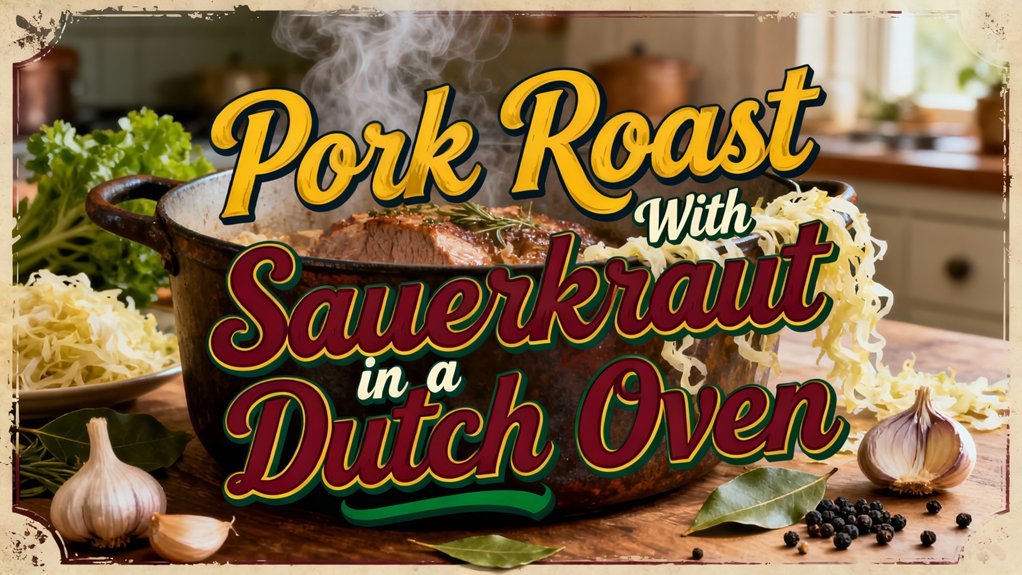
You’ll sear your pork roast in a hot Dutch oven until it’s golden-brown, then nestle it into sauerkraut with braising liquid. Braise it covered at 375°F for approximately 25 minutes per pound until it reaches 145°F internally. The sauerkraut’s acidity tenderizes the meat while infusing rich flavor throughout. After a 15-minute rest, slice and serve with pan juices. Uncover how traditional seasonings like caraway seeds and brown sugar elevate this classic dish.
Selecting and Preparing Your Pork Roast
When you’re choosing a pork roast for Dutch oven cooking, you’ll want to prioritize cuts with adequate marbling and connective tissue that’ll break down during slow cooking. Pork shoulder and pork butt offer superior results due to their fat distribution and texture transformation. Select bone-in loin roasts for even cooking and presentation appeal.
Before cooking, pat your roast dry and let it rest at room temperature for 30-60 minutes. This cut selection promotes ideal moisture retention. For flavor enhancement, rub your pork generously with garlic, herbs, and spices, or marinate overnight. Heritage and pasture-raised pork varieties are noted for having a firmer texture and richer flavor compared to conventional pork, making them an excellent choice for this braise. Season both lean and fatty portions thoroughly to maximize taste development throughout the roast. Bone-in cuts provide more flavorful results during the braising process. These preparation techniques guarantee succulent, flavorful results when braising in your Dutch oven.
Creating the Perfect Sauerkraut Mixture
While your pork roast braises, you’ll want to prepare your sauerkraut mixture with precision to complement the rich, savory meat. Start by selecting your cabbage type—round green, red, or Napa varieties work excellently. Weigh your cabbage and calculate 2% salt by weight; for 800g cabbage, you’ll need 16g salt. Massage the salted cabbage for one hour, squeezing repeatedly to release natural brine. Pack the mixture firmly into your jar, verifying liquid submerges all leaves completely. Add optional ingredients like shredded carrot, ginger, or caraway seeds to enhance sauerkraut flavors. To preserve the naturally occurring bacteria essential for fermentation, do not wash the cabbage before preparation. Allow adequate fermentation time—typically two to four weeks—before incorporating into your Dutch oven dish. For best results during fermentation, consider using high-quality seasoning oil or other quality ingredients to complement your sauerkraut’s development. This controlled preparation guarantees peak taste integration with your pork roast. Position your jar away from direct sunlight on a countertop to ensure optimal fermentation conditions and prevent unwanted microbial activity.
Searing the Pork to Golden Perfection
Once you’ve prepared your sauerkraut and trimmed your pork roast, it’s time to develop that essential golden-brown crust through the Maillard reaction. Heat olive oil in your oven-safe Dutch oven over medium-high heat. Pat your pork dry and season it thoroughly with salt, pepper, garlic powder, and paprika. Sear the roast 2–3 minutes per side until it achieves a golden-brown exterior that locks in juices. This searing technique creates the foundation for a flavorful, tender interior. For ideal crust formation, you’ll shift directly to a preheated 500°F oven for 7–10 minutes, rendering the fat and browning the surface further. This combined approach guarantees your pork reaches a safe 145°F internal temperature without drying out. Throughout the searing and roasting process, it is recommended to use a vent or fan due to the smoke produced. Allowing the roast to rest after cooking is crucial for enhancing flavor and texture, ensuring the juices redistribute throughout the meat for optimal tenderness.
Assembling Your Dutch Oven
Now that you’ve achieved that perfect golden crust, you’ll want to prepare your Dutch oven properly to guarantee prime braising conditions. Dutch oven preparation requires careful attention to heat management and ingredient placement.
Layer your seared pork roast first into the preheated Dutch oven, establishing the foundation for even cooking. Distribute sauerkraut evenly around and over the meat to guarantee consistent flavor distribution throughout the braise. Add specified braising liquids like broth to facilitate proper moisture retention and heat circulation. Remember to rotate the Dutch oven periodically during cooking to ensure even heat distribution and prevent hot spots that could burn your ingredients.
Verify your ingredients fill the oven adequately without overcrowding, which compromises heat flow. Position the lid securely to trap essential heat and moisture during cooking. Confirm the lid fits tightly, creating an effective seal. The tight-fitting lid design is essential for maintaining consistent braising temperatures throughout the cooking process. Check ingredient layering for uniformity before sealing your Dutch oven, guaranteeing prime braising results for your pork roast with sauerkraut. Consider allowing your sauerkraut to undergo proper moisture retention similar to how dough requires adequate hydration during the rising process. This classic braising method, similar to traditional beef bourguignon preparation, creates tender, flavorful results that showcase the versatility of your Dutch oven. The cooking liquid’s aromatic herbs and broth infuse the meat and vegetables with deep, complex flavors during the extended braise. For finishing touches like caramelized vegetable garnishes, consider using precision heat control tools to achieve professional presentation. Just as adjustable flame control is crucial when working with portable heat sources, maintaining proper temperature regulation throughout your braising process ensures consistent results and prevents uneven cooking.
Baking and Monitoring Doneness
After you’ve sealed your Dutch oven, transfer it to a preheated 375°F oven for braising. Plan approximately 25 minutes per pound for your pork roast. Insert a digital oven-safe thermometer into the thickest part, avoiding bone and fat, and set your alarm for 135-140°F as your pull temperature. This strategy prevents overcooking lean cuts.
Monitor multiple spots throughout the roast to verify even cooking. Rotate the Dutch oven 180 degrees midway through baking for uniform browning. Once your thermometer reaches 145°F, remove the roast immediately. If you don’t have a Dutch oven, heavy pots with snug lids can work just as well for braising, as long as they retain heat and moisture effectively. For longer-term storage of leftover pork, consider using vacuum sealing techniques to preserve the meat’s freshness after cooking.
Allow mandatory resting times of at least three minutes. Tent with foil for 10-15 minutes—residual heat will raise the internal temperature to 150-160°F. This resting period preserves juiciness and verifies food safety while the carryover cooking completes. Using a meat thermometer inserted into the thickest part of the roast without touching bone, fat, or any other obstruction ensures you achieve accurate internal temperature readings for safe consumption. Letting the thermometer sit for a few seconds allows the reading to stabilize before recording. Digital probe thermometers offer faster and more accurate measurements compared to traditional analog options. Just as high smoke point oils create durable, long-lasting surfaces on cast iron cookware, proper thermometer use and resting techniques build quality results in your braised pork. Early testing with your thermometer prevents the tough and dry texture that results from overcooking your pork.
Resting and Serving Your Dish
The carryover cooking during your foil-tented rest completes the cooking process, but the work doesn’t end there. Your rest duration directly impacts the final result’s quality. Allow 15 minutes for the roast to rest on a cutting board, loosely covered with foil. This rest duration enables proper moisture distribution as the proteins relax, reversing the squeeze-out effect from cooking. The National Pork Board recommends a minimum 145°F internal temperature before resting.
Transfer your sauerkraut to a serving dish using a slotted spoon, then arrange your thickly sliced pork roast atop the bed. Pour the pan juices over the meat to maximize tenderness and compensate for any dryness from extended cooking. For optimal flavor and presentation, combine the sauerkraut mixture with the pan juices and pork to create a cohesive, well-integrated dish. Making gravy from pan drippings with cornstarch can further enhance the dish’s richness and tie all components together. If you plan to store leftovers, consider using vacuum sealer bags for superior food preservation and extended freshness. Just as deglazing the pot] with liquid lifts browned bits to develop deeper flavors, your pan drippings capture the essential essence of your cooking process. Similar to Dutch oven preparations that rely on flavorful juices to create tender, succulent results, allowing your pork to absorb these pan drippings ensures maximum flavor penetration. When transferring your finished dish to the table, avoid placing the hot Dutch oven directly on a glass top stove if you’re using cast iron, as this can cause damage to the cooktop surface. For an authentic New Year’s Eve celebration, consider emphasizing the family bonds that make this traditional meal meaningful rather than focusing on material presentation. Serve immediately after slicing to preserve warmth and guarantee ideal texture.
Slow Cooker and Alternative Cooking Methods
While traditional oven-roasting delivers excellent results, you’ll find that slow cookers and pressure cookers offer convenient alternatives that don’t compromise on tenderness or flavor. For slow cooker meal prep, cook on low for 8-10 hours or high for 4-5 hours until your pork reaches ideal doneness. High pressure cooking in an Instant Pot accelerates the process—cook 25 minutes per pound at high pressure, then allow natural release for 5 minutes.
Both methods promote exceptional flavor infusion as sauerkraut juices permeate the meat. The key advantage lies in hands-off cooking times that yield consistently tender texture. Before transferring to your slow cooker or pressure cooker, sear the seasoned roast in a skillet to develop deeper flavors. When selecting your skillet for searing, choose one with a smooth cooking surface to ensure proper heat contact and browning. This preliminary step considerably enhances your final dish’s complexity and richness. The combination of searing and slow cooking mirrors the heat distribution and moisture retention that makes dutch ovens so effective for one-pot meals. Dutch ovens excel at braising, a fundamental technique that creates the same deep, layered flavors you’ll achieve with these alternative methods. Proper temperature control is essential to ensure even cooking and optimal meat tenderness across all three cooking approaches. For a traditional New Year’s Day celebration, layer your sauerkraut at the bottom of the cooker before adding the pork to ensure even distribution of flavors. A boneless pork loin roast is the ideal cut for these alternative cooking methods, ensuring consistent results across different slow cooker brands and models.
Tips for Traditional Flavor and Success
To achieve authentic pork roast with sauerkraut, you’ll need to focus on foundational preparation techniques that establish superior browning and even cooking. Start by bringing your pork to room temperature for 20-30 minutes, ensuring even heat distribution throughout the roast.
Season with traditional spices—salt, pepper, and smoked paprika—then sear all sides in a hot Dutch oven over medium-high heat. This develops a flavorful crust that enhances the final dish. Like camping Dutch oven recipes, proper charcoal placement and heat management are essential for even cooking results. After cooking, clean your Dutch oven by rinsing under hot water, scrubbing with a stiff brush to remove residue, and thoroughly drying with a towel to prevent rust.
For authentic flavor combinations, incorporate caraway seeds, which define Pennsylvania Dutch cuisine. Balance the sauerkraut’s acidity with apples, brown sugar, and optional maple syrup or mustard. Layer the sauerkraut mixture beneath your seared pork, then deglaze the pan with apple juice or stock to capture caramelized bits. A fitted lid on your Dutch oven helps retain moisture and heat during the brasing process, ensuring your pork stays tender and flavorful. Just as creating steam is essential for developing a crispy exterior in bread baking, the steam environment created by your covered Dutch oven will help achieve optimal texture and flavor. For accurate doneness verification, use a precision measuring instrument like a meat thermometer to check internal temperatures. This traditional New Year’s meal is believed to bring good luck when served with complementary sides. Cover tightly and bake at 325-350°F until your thermometer reads 145-160°F internally.