
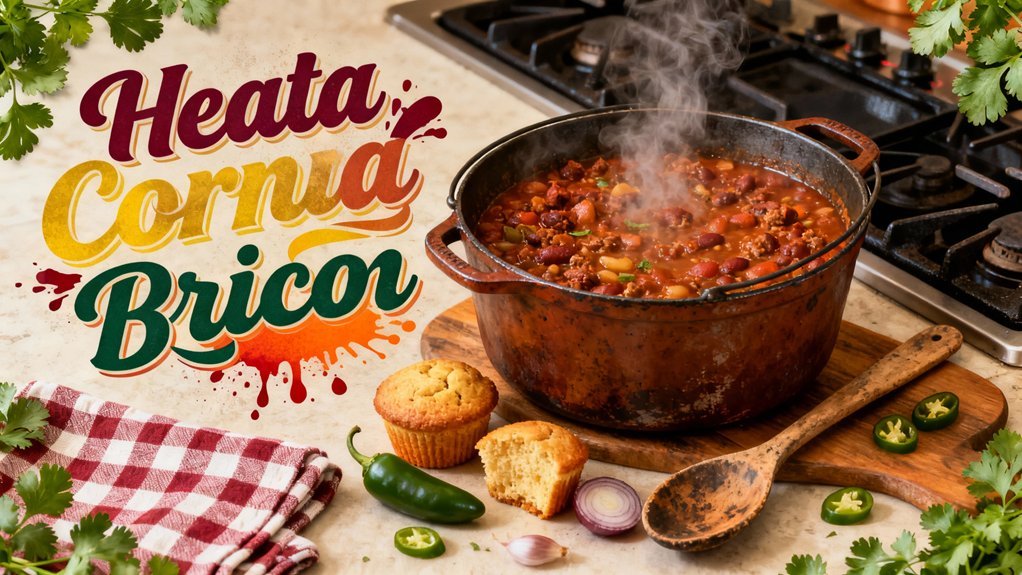
You’ll sauté onions and peppers, brown your chosen meat, then layer in aromatic spices—chili powder, cumin, paprika—letting them toast for maximum depth. Simmer low and slow for 20-30 minutes until flavors concentrate and thicken naturally. Meanwhile, fold cornmeal batter with corn kernels, pour it over your bubbling chili, then bake until golden edges shatter crispy. The result? A rustic, smoky masterpiece that’ll rewarm any gathering—and there’s plenty more technique to perfect this show-stopping one-dish wonder.
Preparing the Chili Base
Whether you’re using a 6-quart or 12-inch Dutch oven, start by heating a tablespoon of olive oil over medium-high heat until it shimmers—you’ll notice the surface glisten and move fluidly across the pan. Add your diced onions and sauté for four minutes until they soften and turn translucent. Introduce diced peppers next, cooking for another two to three minutes until they begin browning at the edges.
Now add your chosen meat—lean ground beef, elk, or venison works beautifully. Break it into small pieces as it browns, cooking for about ten minutes while choosing ingredients with care. Stir in minced garlic thirty seconds before incorporating two tablespoons of tomato paste. Cook this paste for two to three minutes, allowing it to caramelize and deepen in color. For enhanced flavor depth, consider using tomato paste in tube form for ease of use and superior consistency. This layering technique of aromatics and proteins mirrors the one-pot meal approach favored in Dutch oven camping cooking. Like the low and slow braising method used for traditional braises, building a flavorful foundation through proper searing and sautéing creates depth and complexity in your finished dish. After this essential sauté technique builds your chili’s flavorful foundation, drain excess fat from the meat to prevent a greasy final dish. For optimal storage of your finished chili, consider using food preservation bags to extend shelf life and maintain quality in the freezer. As with the rich crust development achieved when searing meats in Dutch ovens, this initial browning stage is crucial for creating layers of flavor that will distinguish your chili. To prevent damage to your Dutch oven’s enamel coating during this high-heat searing phase, ensure you preheat gradually before introducing your ingredients.
Building Flavor With Spices and Seasonings
Now that your aromatics and meat have built a rich, caramelized base, it’s time to layer in the spices that’ll transform your chili into something truly memorable. Your spice selection matters tremendously—reach for real chiles over pre-made mixes when possible. Toast 3 tablespoons of chili powder, 2 tablespoons of cumin, 1 tablespoon of paprika, and 2 teaspoons of cayenne in the oil for one minute, releasing their essential oils into aromatic clouds. Stir in tomato paste, letting it caramelize slightly with the spices. This flavor layering technique deepens complexity exponentially. The even heat distribution of a quality Dutch oven ensures these spices bloom evenly and release their full potential. For optimal results, preheat your Dutch oven over medium heat to ensure consistent cooking throughout the process. A tight-fitting lid will help trap heat and create the ideal cooking environment for your chili. You can monitor the internal temperature of your chili using an infrared thermometer to ensure it reaches the desired heat level. Longer cooking times will yield richer flavors in your final chili, so resist the urge to rush this essential step. Add your 4-ounce can of diced green chiles, then deglaze with beer if desired. Season with 2 teaspoons of salt and 1 teaspoon of black pepper for balance, adjusting to taste as your chili simmers. Vacuum sealing preserves the flavors and nutrients you’ve worked so hard to develop by removing oxygen from the storage environment. For longer storage of your finished chili, consider using hand held vacuum sealers to preserve portions and extend shelf life in your freezer.
Simmering and Thickening Your Chili
Once your spices have melded with the tomato paste and your liquid’s been added, you’re ready to coax your chili toward its ideal consistency. Your simmering techniques set the foundation: remove the lid and let heat work its magic on low, stirring occasionally as excess liquid evaporates over 20-30 minutes. This low and slow approach concentrates flavors while thickening naturally. You can prepare cornbread while simmering to have it ready when your chili reaches the desired consistency. The Dutch oven’s exceptional heat retention ensures even cooking throughout this gradual process, making it an ideal vessel for one-pot meals that deliver superior results.
For faster thickening methods, you’ve got options. A flour slurry—two tablespoons mixed with cold water—stirred in over medium heat thickens within minutes. Cornstarch works similarly, creating body without altering taste. Alternatively, quick oats absorb liquid in just three minutes, or finish with a dairy swirl for creamy richness. Much like removing air from food storage extends freshness, removing excess liquid from your chili concentrates its flavors and improves texture. When vacuum sealing leftover chili, pre-freezing the liquid prevents the sealer from drawing moisture into the machine and compromising the seal. Choose your method based on how quickly you need results and what flavor profile you’re after. A spoon should easily scoop solid components without excess broth when your chili reaches optimal thickness.
Making the Cornbread Topping
As your chili simmers and thickens to perfection, you’ll want to prepare a golden cornbread topping that’ll crown your Dutch oven masterpiece. Whisk together one cup cornmeal, three-quarters cup flour, one-third cup sugar, and one and a half teaspoons baking powder. In another bowl, combine two eggs, one cup buttermilk, and five tablespoons melted butter until smooth. Fold the wet ingredients into the dry mixture—lumps are perfectly fine. Stir in three-quarters cup corn kernels for textural contrast that complements your rich, savory chili below. Consider cornbread variations like pepper jack cheese or jalapeño honey butter to elevate your topping. When cooking over a campfire, ensure your Dutch oven has superior heat retention to bake the cornbread evenly while the chili cooks beneath. The moist texture created by the buttermilk ensures your cornbread topping will remain tender and delicious even as it bakes atop the hot chili. This balance between savory and slightly sweet flavors makes the cornbread an ideal accompaniment to hearty meals like the chili simmering below. Spread this batter directly over your simmering chili, creating an inviting golden layer that’ll bake into crusty perfection.
Baking and Serving Your Dutch Oven Masterpiece
Your Dutch oven‘s ready to transform that cornbread batter into golden perfection, so preheat it to 400 degrees whether you’re working indoors or over a campfire. For campfire cooking, position 18 briquettes beneath your pot and crown the lid with 16 hot coals, creating an enveloping heat that bakes evenly from all sides.
Bake covered for 20-30 minutes, watching as the cornbread’s edges turn golden-brown and crispy. At the 20-minute mark, insert a toothpick into the center—a clean withdrawal signals doneness. Using a digital oven thermometer can help verify that your cornbread has reached the ideal internal temperature for perfect texture. The top should rise firm and proud above your bubbling chili. Once the cornbread reaches the proper golden-brown color, your Dutch oven chili is ready to serve. Like the slow-cooked pork roast method, the Dutch oven’s even heat distribution ensures perfectly tender results throughout the cooking process.
Serve your masterpiece directly from the Dutch oven, scooping generous portions into bowls. Dutch ovens feature a rimmed lid that ensures even heat distribution throughout the cooking process. To deepen the flavor profile of your dish, consider deglazing the Dutch oven with balsamic vinegar or tomato paste before serving for added richness. Top with sharp cheddar, diced onions, or jalapeños. When transporting your Dutch oven, wrap it individually with protective packing materials to prevent scratches and damage during handling. The versatility of cast iron Dutch ovens makes them perfect for both savory mains and sweet campfire desserts. Enjoy it piping hot, paired with cold beverages for the ultimate campfire or kitchen experience.