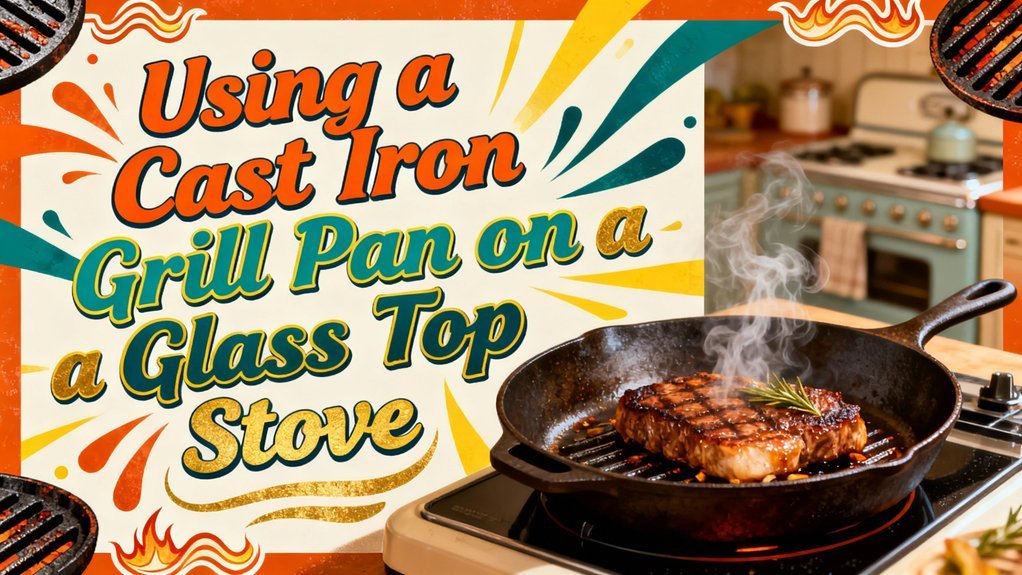
You can safely use a smooth-bottomed cast iron grill pan on your glass top stove if you handle it carefully. Lift the pan gently—never drag or slide it—to prevent scratching. Center it directly over the heating element and allow 5-10 minutes for gradual preheating. Avoid thermal shock by cooling slowly and cleaning the bottom before each use. Use a trivet for added protection. Following these precautions minimizes risks, though understanding the specific demands of glass cooktops reveals additional considerations worth exploring.
Compatibility With Glass Top Stoves
Although cast iron cookware can work on glass-top stoves, you’ll need to meet specific requirements to avoid damage. Cast iron compatibility depends primarily on your pan’s bottom surface condition. You must verify your grill pan has a smooth, flat bottom that makes complete contact with the heating element. Rough, raw cast iron surfaces pose significant scratching risks to your cooking surface.
Lodge and other manufacturers confirm that smooth-bottomed cast iron performs safely on glass-top ranges, including induction models. Your grill pan’s weight combined with an uneven bottom creates potential for both thermal shock and surface damage. Always lift and gently place your cookware rather than sliding it across the surface to prevent scratches and cracks. Gradual temperature adjustments are less responsive on glass tops, requiring patience during the heating process. The pre-seasoned cooking surface of quality cast iron ensures optimal performance and safety on your glass stovetop. For serious home cooks seeking maximum flexibility, investing in multiple sizes of quality cookware allows you to select the ideal pan for each cooking task.
Match your pan’s size to your burner to maintain even heat distribution. A fitted lid transforms your grill pan into a multi-functional cooking tool, enabling braising and steaming directly on your glass cooktop. Pre-heating times on electric stoves require adequate lead time to ensure the pan reaches optimal temperature before cooking begins. Some manufacturers suggest considering porcelain enamel-coated alternatives to cast iron for additional protection against potential damage to your glass cooktop. You’ll achieve best results when your cast iron compatibility requirements align with proper handling techniques and gradual temperature adjustments.
Safety Precautions and Best Practices
Now that you’ve confirmed your cast iron grill pan meets compatibility standards, you’ll need to implement specific handling and maintenance routines to protect your glass-top stove. Start by cleaning and drying your pan’s bottom thoroughly before each use, removing debris that causes scratches. Lift the pan gently—never drag or drop it. Center the pan on the burner to distribute weight evenly and enhance cooking efficiency. Preheat gradually on low to medium settings to avoid thermal shock. Since cast iron retains heat well, it will continue cooking food even after you remove it from the burner. These safety considerations prevent cracking and structural damage. After cooking, promptly remove the pan to a cooling rack rather than leaving it on the hot surface. Consider using a trivet under hot cookware to avoid direct contact with the glass, which provides an additional layer of protection. A fitted lid transforms your grill pan into a multi-purpose cooking vessel capable of braising and roasting in addition to grilling. The cast iron’s superior heat retention and distribution creates an ideal cooking surface that develops a natural seasoning over time. To maintain your cast iron’s durability, apply a light coat of oil after the pan cools to preserve its seasoning. For best results, bring your food to room temperature and pat it dry to prevent excess moisture before cooking. Finally, wipe your cooktop immediately with a microfiber cloth and vinegar-water solution to eliminate residue and maintain long-term integrity, just as you would maintain other kitchen surfaces by preventing freezer burn and odors that can accumulate over time.
Heat Distribution and Performance
Achieving ideal cooking results on a glass-top stove requires you to understand how cast iron distributes heat differently than it would on gas burners. You’ll notice that glass cooktops concentrate heat centrally, creating uneven temperature zones across your grill pan’s surface. To optimize cookware efficiency, match your pan’s diameter precisely to your burner size—oversized pans on small burners produce dangerous hotspots.
You should employ a heat diffuser between your cast iron and cooktop for superior heat diffusion. This accessory markedly reduces peripheral cool spots while preventing glass surface damage. Start preheating gradually over five to ten minutes, allowing the pan’s weight to distribute temperature evenly. Cast iron’s excellent heat retention capabilities make it particularly well-suited for achieving consistent results on electric surfaces when given adequate preheating time. Proper seasoning of cast iron ensures even heat distribution and prevents uneven cooking zones. Like glass-lid Dutch ovens that benefit from proper preheating techniques, cast iron cookware requires patience during the warming phase to achieve optimal performance. Consider using silicone handle covers to protect your hands from heat during the extended preheating process. Using an instant read thermometer can help verify that your food has reached safe internal temperatures across different zones of your grill pan. For extended food preservation during meal prep, consider pairing your cast iron cooking with vacuum sealing techniques to maintain the quality of your prepared dishes. You’ll gain better browning results and more consistent cooking performance by respecting these thermal dynamics specific to electric glass surfaces.
Potential Risks to Consider
While optimizing heat distribution safeguards your cooking performance, you’ll also need to address the distinct hazards that cast iron introduces to glass cooktops.
Weight damage poses your primary concern. Cast iron’s substantial mass creates concentrated pressure that risks cracking or chipping the glass surface upon impact. Even careful placement can generate stress fractures over time.
Thermal stress presents an equally serious threat. The temperature differential between hot cast iron and cooler glass induces expansion mismatches that cause cracks. Rapid cooling accelerates this damage considerably. Using an instant-read thermometer can help you monitor when your food is properly cooked so you can remove the pan from heat promptly and minimize thermal stress exposure.
Additionally, dragging your pan across the surface scratches the glass, while residue from unclean cookware burns onto the cooktop. Always lift and reposition your grill pan deliberately, remove it promptly after cooking, and confirm the pan’s base remains clean and debris-free. Proper cast iron maintenance, including seasoning the skillet multiple times with high-quality oil, helps preserve the pan’s surface integrity and prevents debris buildup that could damage your glass cooktop. To maintain your skillet’s condition, thoroughly dry the pan after each use and apply a thin coat of oil to prevent rust and buildup. Unlike non-stick pans coated with PTFE, cast iron does not release harmful chemicals during normal use, making it a safer cookware choice despite its demanding cooktop requirements. To further protect your glass cooktop, ensure the bottom of cookware is smooth before placing your grill pan on the surface.
Preparing Your Grill Pan for Use
Start by thoroughly cleaning your pan, removing all food debris and residue. Use water and a stainless mesh scraper while the pan’s still warm to prevent buildup on your glass surface. Avoiding soap during this process will preserve the griddle’s seasoning and maintain the non-stick properties you’ve built up over time.
Next, master proper preheating techniques. Heat your pan gradually on medium for 10-12 minutes, then adjust to medium-high for 5-10 minutes. Test readiness by splashing water drops—they’ll dance when temperature’s ideal. This gradual approach prevents thermal shock and food sticking. Similar to how protection from oxidation preserves quality in storage, gradual heating protects your cookware from damage. Just as even heating prevents breakage from uneven stress in specialized cooking applications, maintaining consistent temperatures during preheating ensures your pan performs optimally.
Finally, apply seasoning methods that build a protective layer. Coat the pan with thin flaxseed oil applications, wipping away excess. For best results, choose oils with a high smoke point like avocado oil to ensure the seasoning layer develops properly without burning. Place it upside down in a 400°F oven for one hour per coat, repeating three times for best results. Proper seasoning technique matters more than the specific oil chosen, as thin layers and heating past the oil’s smoke point create the desired hard, non-stick patina. For extended storage between uses, consider that maintaining your seasoning layer through consistent care provides the same long-term preservation benefits as enzyme deactivation does for frozen foods. These preparation steps guarantee reliable, safe performance.
Proper Placement and Handling Techniques
How you position and handle your cast iron grill pan will ultimately determine whether you’ll cook successfully or damage your glass cooktop. Your placement techniques should center the pan directly over heating elements with its smooth bottom making even contact with the glass surface. For handling tips, lower the pan slowly using both hands to prevent cracking, maintaining a level position throughout descent. Never drag or slide the cookware across glass; instead, lift it completely when repositioning. Before heating, inspect the pan’s base for smoothness and clean away any debris. Confirm stable placement prior to activation. Start with light pressure to test compatibility, then adjust burner settings gradually. Similar to preparing dishes like one-pot pork tenderloin meals, proper heat management ensures even cooking and prevents damage to your cooktop surface. Nonstick coatings make cleanup easier and reduce the need for excess cooking oils during your meal preparation. For long-term cookware investment, consider that seal strength and durability are important factors when evaluating whether your cast iron pan will withstand repeated use on glass stovetops. Proper seasoning and maintenance will extend the life of your cast iron cookware and keep it performing optimally on any stovetop. Cast iron skillets can safely reach temperatures up to 500°F or higher due to their thick construction and heat retention qualities. Using vacuum sealing can help preserve prepared cast iron cookware meals for future use by removing air and extending shelf life. Remove the pan from heat before allowing it to cool on a separate surface away from the cooktop. Unlike cast iron grill pans, the Steelmade flat top griddle is not compatible with glass ceramic or electric stoves, making it essential to verify your cookware matches your stovetop type before purchase.
Maintenance and Care Guidelines
Because cast iron requires consistent upkeep to maintain its performance and longevity on your glass cooktop, you’ll need to establish a thorough cleaning routine immediately after each use. Your cleaning methods should include wiping the pan with a dry paper towel first, then washing it with hot water and minimal dish soap using a clean cloth. Dry it thoroughly with paper towels, then place it on low heat briefly to evaporate remaining moisture.
For rust prevention, you must rub a light oil layer across the entire surface after drying. If rust develops, scrub it with stiff-bristled brushes and re-season the pan. Frequent cleaning prevents buildup that leads to rust formation. The seasoning process builds a resilient non-stick layer through polymerization of oils that improves with use over time. You can enhance seasoning by baking a thin layer of oil in the oven for additional protection. Complete moisture removal before storage remains essential to protecting your investment and ensuring reliable performance. Proper heat-resistant work surfaces help protect both your cast iron and cooktop during the seasoning and maintenance process. To extend the lifespan of your cast iron grill pan, avoid dragging it across the glass cooktop surface and instead lift and place it gently to prevent scratches that could compromise both the pan and the stovetop. Regular seasoning is also critical for maintaining optimal performance and non-stick properties of your grill pan over time.