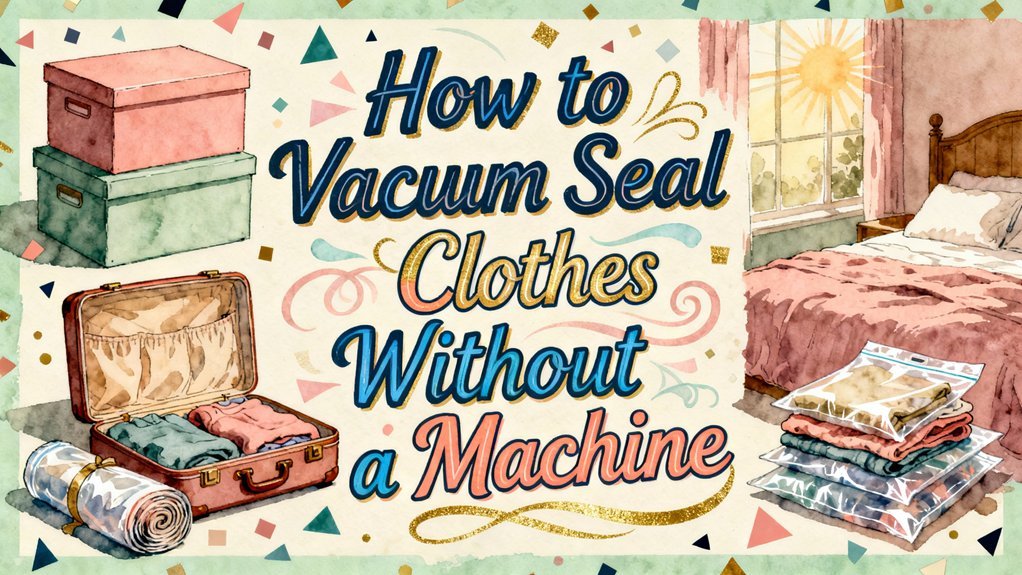
You’ll compress your clothes without a machine by using ziplock bags, a straw, or household items. Place clean, dry clothes in a freezer bag, insert a straw through a small opening, and seal tightly around it. Submerge the bag in water and apply pressure to force air out through the straw, then quickly remove it and seal completely. Roll-up compression bags with airtight zippers work similarly. You can reduce garment size by up to 75%, protecting fabrics from dust and pests. Uncover multiple proven techniques to maximize your storage space.
Ziplock Bag Vacuum Method
The ziplock bag vacuum method offers you a straightforward way to compress clothes using equipment you likely already have at home. Start by selecting appropriate ziplock sizes—a smaller bag nested inside a larger one works best for ideal compression.
Prepare your clothes by ensuring they’re clean and completely dry, then fold them neatly. Place the smaller bag inside the larger one, leaving it slightly open. Use a hand-operated pump or sink aspirator to remove air from both bags simultaneously. This cost-effective alternative to purpose-built vacuum sealers works well for storage timescales comparable to sous-vide cooking durations. For extended storage periods, storing your compressed bags in a cool, dry place will prevent external elements from damaging them and ensure your clothes remain protected.
Master your sealing techniques by sliding the zipper closed, then using the supplied clip for an initial airtight seal. Pinch both zip parts firmly with your fingers for complete closure. Double-check the seal by sliding the zipper back and forth. Once you’ve verified everything’s secure, begin vacuuming until the bag stops shrinking, then close the valve securely.
Garbage Bag Vacuum Technique
If you’re looking for an even simpler compression method than ziplock bags, the garbage bag vacuum technique delivers impressive results using just a standard household vacuum and sturdy plastic bags. Fill a drawstring kitchen bag or large black garbage bag with clothes or bedding. Hold the bag’s opening tightly closed around your vacuum hose while you remove attachments for easier insertion. Turn on the vacuum and maintain the seal until maximum compression occurs. The hose will extract air, shrinking contents considerably. These garbage bag techniques work effectively for storage and travel. Confirm you’re positioning the hose against packed items to prevent sucking bag sides inward. Black garbage bags are less prone to tearing compared to other plastic bag types, making them ideal for this vacuum packing method. Before vacuum sealing, ensure all clothing items are thoroughly washed and dried according to their care instructions to prevent damage and odors during storage. Unlike food vacuum sealing, which requires specialized vacuum sealers to create proper air-tight seals, clothing compression with a regular vacuum is effective because textiles don’t require the same food safety considerations. This method can achieve space savings of up to 80%, making it an excellent alternative to electric pump systems for budget-conscious travelers. Test this vacuum packing method on a small clothing batch first to validate it works for your needs before committing larger loads.
Straw-Assisted Vacuum Packing
For vacuum packing without electricity or specialized equipment, you’ll want to try the straw-assisted method—a surprisingly effective technique that relies on nothing more than a drinking straw and water displacement. Begin by inserting the straw into your partially sealed freezer bag, positioning it near the bottom to access trapped air pockets. Seal the bag tightly around the straw using your fingers or a clip to maintain an airtight seal. Submerge the sealed bag into a water-filled basin, then gently press downward. Water pressure forces air outward through the straw, creating a vacuum effect. Once air flow stops, quickly remove the straw and immediately pinch the opening closed. This process is particularly useful for delicate fabrics that require gentle compression handling. Before storing your compressed clothes, ensure they are organized by fabric type to prevent damage and color transfer during the vacuum-sealing process. The water displacement method also works exceptionally well for short-term storage of garments you plan to wear or launder soon. Similar to achieving proper heat distribution in cooking, consistent pressure application throughout the sealing process ensures even compression of your garments. Proper labeling and organization of your compressed garments will help you track storage duration and maintain inventory efficiency, much like monitoring internal temperature ensures optimal results. Like the slow-braising technique used in Dutch oven cooking, this method relies on time and pressure to achieve optimal results. Your clothes compress dramatically without expensive equipment, and this manual approach offers cost savings compared to purchasing specialized vacuum-sealing machines.
Roll-Up Air Removal Method
While you don’t need a pump or vacuum cleaner, you’ll want to invest in quality roll-up compression bags—preferably 24×16 inches with durable, anti-rip material and an airtight zipper—to make this method work effectively.
Your roll up technique begins by folding clothes carefully and stacking them without overfilling. Position thicker items strategically and leave space near the zipper. Now roll the bag tightly from the bottom toward the zipper, applying steady pressure throughout. Including silica gel packets alongside your clothing can help prevent moisture absorption during storage. Similar to how even heat distribution in specialized cooking equipment ensures optimal results, proper air removal techniques create uniform compression throughout your bag. Just as container depth affects circulation in precision cooking applications, the dimensions of your compression bag influence how effectively air can be expelled during the rolling process. For best results, apply multiple rounds of compression to your storage bags, much like the seasoning process used in cast iron restoration.
For maximum efficiency, you can also use a straw inserted method to remove any remaining air before beginning the rolling process. During manual compression, squeeze air continuously while rolling, pushing it toward the open zipper end. Kneel or sit on the bag if needed for extra force. Roll multiple times to eliminate residual air pockets. This method can reduce size of items by up to 75% when executed properly. Once you’ve expelled maximum air, engage the zipper fully and pinch its edges to confirm complete sealing. Check integrity immediately to prevent air re-entry, as maintaining airtight seals is essential to protecting stored items from moisture and dust contamination over time.
Troubleshooting Vacuum Sealing Issues
Even with proper rolling and compression techniques, you’ll encounter problems that prevent clothes from staying compressed or bags from sealing properly.
Common sealing failures stem from insufficient strips on bag tops. Apply three strips instead of one for reliable vacuum seals. Before vacuuming, squeeze excess air manually to guarantee complete air extraction. Hold the bag closed completely around your vacuum hose with your hand to maintain suction and prevent the machine from sucking in bag material.
If problems persist, test your pump on the bag surface first to activate airflow vents. For stubborn air pockets, use a rechargeable pump despite the time delay. Insert support disks under problem seals to improve airflow. Consider using freezer bags with textured ridge tops as a cost-effective alternative that provides better structural integrity for air evacuation. For manual air removal without a pump, the water displacement method can effectively push air out of bags before sealing. These systematic adjustments address most vacuum sealing issues effectively, and when done correctly, can achieve significant space-saving compression comparable to machine-sealed bags. Vacuum sealing works best when combined with proper meal prep planning to maximize your storage efficiency and reduce overall food waste. Proper maintenance of your equipment prevents thermal shock and equipment failure that can compromise your sealing results. For liquid-based items like marinades or dressings, pre-freezing the liquid first prevents your vacuum sealer from drawing moisture into the machine, which would otherwise compromise the seal and create a mess.
Applications and Benefits
Vacuum-sealed clothes deliver transformative benefits across multiple scenarios. You’ll find storage optimization essential when you’re managing limited closet space or preparing for relocations. By compressing garments to 20% of their original size, you’re maximizing your available square footage considerably.
Garment protection becomes your priority during long-term storage. You’re shielding fabrics against dust, pests, and moisture damage through waterproof sealing. Your seasonal items remain fresh and protected from humidity fluctuations. For best results, store vacuum bags in climate-controlled environments to prevent long-term bonding and potential damage to your textiles. Proper ventilation during storage helps maintain fabric integrity, similar to how well-ventilated areas are essential when handling volatile materials. Like cast iron cookware that requires regular maintenance to preserve its quality, vacuum-sealed garments benefit from periodic inspection to ensure continued protection. Strong sealing performance is critical to maintaining the integrity of your garments throughout the storage period, protecting them from environmental contaminants and seal strength degradation over time. Vacuum sealing removes oxygen from the storage environment, which reduces oxidation and bacterial growth that could compromise your garments. Research on vacuum-sealed storage shows that this method can extend the preservation of items by 3 to 5 times longer compared to conventional storage methods.
You’ll also appreciate the travel advantages. You’re fitting more clothing into suitcases while preventing dirt exposure during transport. The see-through design lets you identify specific items quickly without unpacking everything. Remember that vacuum packing does not reduce weight, so you’ll still need to account for total luggage mass when traveling.
Whether you’re decluttering, traveling, or preserving off-season wardrobes, vacuum sealing provides practical, cost-effective solutions that you’ll rely on repeatedly.