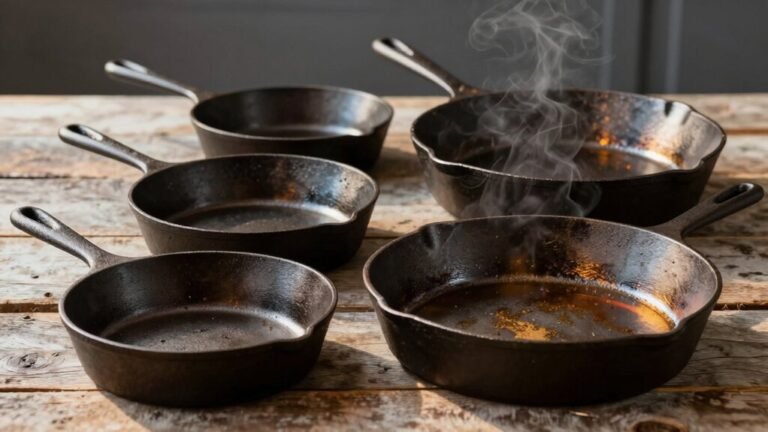
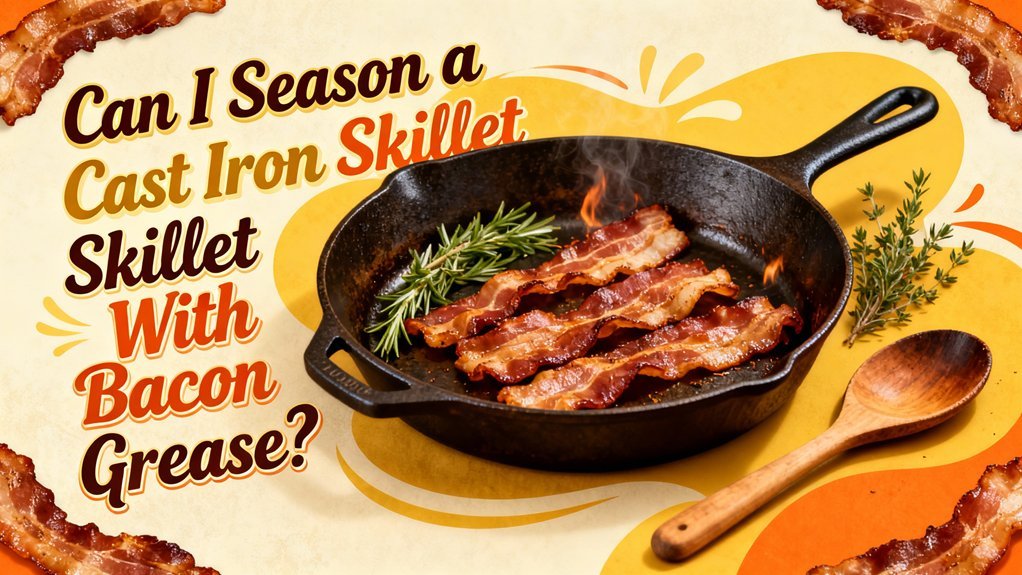
Yes, you can season your cast iron skillet with bacon grease. It’s a cost-effective option that creates a protective non-stick surface through polymerization when heated above its 375°F smoke point. The fat molecules rearrange into a glassy carbon layer that acts as a food barrier. However, bacon grease produces a softer seasoning than alternatives like flaxseed oil, requiring more frequent maintenance. You’ll need to apply multiple thin layers and repeat the heating process for ideal durability and flavor development.
Does Bacon Grease Work for Cast Iron Seasoning?
Can you season cast iron with bacon grease? Yes, you can, though it offers distinct trade-offs. Bacon grease benefits include its natural composition, cost-effectiveness, and the distinctive smoky flavor it imparts to your cookware. Its 375-degree Fahrenheit smoke point allows safe oven seasoning without excessive smoking. Regular cooking with fats can maintain seasoning, requiring less frequent re-seasoning compared to skillets used without cooking oils. With proper care and maintenance, seasoned cast iron cookware can last a lifetime, making bacon grease a practical choice for long-term kitchen investments.
However, bacon fat challenges emerge over time. The seasoning it creates is relatively soft and less durable than alternatives like flaxseed oil, which produces harder, smoother finishes. You’ll likely need more frequent maintenance since the coating tends to wear faster than ideal oils. The most effective seasoning comes from applying thin layers and heating the pan past the oil’s smoke point to create a polymerized coating. Similar to how low cooking temperatures help preserve tender results in braised dishes, maintaining proper heat control during seasoning prevents degradation of the protective layer. To preserve your seasoning, avoid using harsh abrasives] during cleaning, as they can damage the protective layer you’ve built up. Proper food handling practices such as maintaining clean utensils will help protect your seasoning investment.
Despite these limitations, many cooks successfully use bacon grease. Your cast iron will remain usable, though you’re trading maximum durability for convenience and the appealing bacon-infused flavor profile.
Why Bacon Fat Creates a Non-Stick Surface
While bacon grease‘s durability limitations might concern you, the fat’s chemical composition actually excels at creating a protective non-stick surface through a process called polymerization. When you heat bacon grease above its smoke point, the fat molecules undergo fat bonding, rearranging their chemical structure into a solid, durable layer. This polymerized coating forms a glassy carbon network that acts as a barrier between your food and cast iron.
The seasoning benefits extend beyond protection. Your seasoned skillet becomes modestly oliophilic, attracting and retaining oil that maintains lubrication during cooking. Multiple heating applications build successive cured layers, progressively enhancing non-stick properties. Unlike synthetic coatings, this organic film strengthens with repeated use, creating an increasingly effective cooking surface that improves over time. Bacon grease also infuses the cookware with distinct savory flavor that enhances your cooking experience. The hardened oil creates a glass-like organic seasoning, not a polymer, with molecular structures that change when baking oil above smoke temperatures.
Preparing Your Cast Iron Skillet
Before you apply that bacon grease, you’ll need to prepare your skillet properly—starting with a thorough cleaning to remove any cooked-on food and residual seasoning. Use warm, soapy water and salt combined with a kitchen towel to scrub firmly in circular motions, employing effective cleaning techniques that dislodge stubborn debris without damaging the surface. Rinse thoroughly and dry completely with paper towels or a lint-free cloth—moisture compromises the seasoning process. For stubborn buildup, consider using a Lodge polycarbonate pan scraper to gently remove debris without harming your skillet’s surface. The salt scrubbing method effectively extracts impurities and loosens debris when your skillet is heated until smoking hot, then worked with a vigorous scrubbing motion.
Your skillet preparation continues with preheating. Place your skillet upside down in a cold oven before turning on the heat. This gradual temperature increase prevents oil from burning off the smooth surface. Preheat to 200 degrees Fahrenheit initially, allowing the skillet approximately 20 minutes to reach that temperature before proceeding with your bacon grease application. Building a durable nonstick layer requires patience and proper temperature progression throughout the seasoning process. For optimal results, apply a thin coat of oil after cleaning to maintain and build up the seasoning on your skillet. Cooking frequently with cast iron maintains the seasoning layer and ensures your skillet performs optimally during the seasoning process.
Gathering Your Materials and Tools
Now that you’ve prepped and preheated your skillet, you’ll need the right tools and materials to apply bacon grease seasoning effectively. When gathering materials, procure high-quality bacon grease—rendered fat works best for building resilient seasoning layers. You’ll also need paper towels or lint-free cloths for application and moisture removal.
For selecting tools, choose a natural fiber brush to apply the grease evenly across all surfaces. Keep paper towels nearby to wipe excess seasoning into a thin, matte coat. If you encounter stubborn residue beforehand, have a chain mail scrubber available for gentle cleaning without compromising seasoning. The Cast Iron Care Kit includes both a natural fiber brush and chain mail scrubber specifically designed for maintaining your cast iron cookware. Natural fiber brushes feature stiff natural union fiber bristles that effectively clean cast iron without causing damage.
Position everything within arm’s reach of your stovetop. This organized setup guarantees you’ll work efficiently while your skillet remains at peak temperature, maximizing seasoning adhesion and durability. To maintain your skillet’s natural nonstick seasoning, always ensure the surface is thoroughly dried before applying oil. After seasoning, allow your skillet to cool completely and then apply a light coat of oil] to prevent rust and maintain the seasoning layer. The bacon grease must reach its smoke point so it bonds chemically with the cast iron, forming a durable protective layer. Bacon grease with a high smoke point of around 400 degrees Fahrenheit allows it to withstand high heat without burning or smoking, which helps build and maintain the skillet’s seasoning layer. Oils with high smoke points], typically above 400°F, prevent burning and smoking during high-heat cooking while helping to build and maintain the skillet’s seasoning layer.
Applying Bacon Grease Correctly
Once you’ve gathered your materials, you’ll apply the bacon grease in a controlled, thin layer across your skillet’s entire surface. Start by straining your grease through fine mesh to remove particulates that could create uneven seasoning. Use a tablespoon or two total for standard skillets—this quantity prevents excess buildup that compromises the seasoning layer’s integrity.
Apply grease evenly using a wadded paper towel or pastry brush, working methodically across the cooking surface and handle. Avoiding excess requires wiping surplus grease back into your storage jar immediately after application. This technique eliminates dripping and pooling, which create sticky residue rather than a protective patina. For maintenance between seasonings, apply bacon grease every couple months to keep your skillet’s protective coating in optimal condition. Like Dutch ovens, cast iron skillets benefit from excellent heat retention that builds durable seasoning over time. To protect your skillet’s handle while cooking, consider using 100% cotton yarn to create a protective cover. A fitted lid can also help retain moisture and heat during longer cooking sessions. Proper seasoning with high smoke point oils ensures longevity and optimal non-stick performance. After application, heat your skillet to the smoke point of the oil to ensure proper polymerization of oils during heating. Your meticulous approach guarantees a uniform, thin coating that’ll polymerize effectively during heating, building durable seasoning that enhances your skillet’s nonstick properties and rust resistance.
Baking Your Skillet in the Oven
After you’ve applied your thin bacon grease layer, you’ll transfer your skillet to the oven for polymerization. Position it upside down on the center rack to prevent oil pooling—this guarantees even seasoning adhesion. Place aluminum foil on the bottom rack for oven safety by catching excess drips.
Follow this multi-step temperature protocol: preheat to 200°F for 15–20 minutes, increase to 300°F for 15 minutes after wiping excess oil, then bake at 400°F for 2 hours. Your oil selection matters; bacon grease has a relatively low smoke point compared to some oils, which means your seasoning may degrade faster under extremely high heat. For initial seasoning, oils with high smoke points between 370-450 degrees Fahrenheit are typically recommended for more durable results. Seasoning involves oil baked onto the pan via polymerization, which creates a durable, bonded layer on your cast iron. Similar to achieving precision results with specialized tools like a dutch oven, maintaining even heat distribution across your skillet ensures consistent seasoning buildup. For optimal results, repeat the coating and baking process up to three times for enhanced nonstick buildup.
Allow your skillet to cool completely inside the oven afterward. This cooling phase promotes seasoning adherence and prevents thermal shock. To preserve your seasoning investment long-term, store your skillet with separators to allow airflow and avoid moisture exposure. You can repeat this entire cycle up to three times for enhanced nonstick buildup.
Stovetop Seasoning Alternatives
While oven baking provides thorough polymerization, stovetop seasoning offers a faster, more accessible method that builds seasoning layers through direct heat application. You’ll preheat your skillet over medium heat for two minutes before increasing to high temperature. During stovetop oiling, you apply a very thin layer of vegetable, canola, or Crisco oil—the surface smokes immediately around 420°F. You’ll allow smoking for 5-10 seconds, then wipe excess oil with a clean rag to prevent stickiness. Repeat this process multiple times, letting the skillet darken visibly with each layer. Alternatively, seasoning sprays provide thin, even coverage without mess. Between layers, allow 30 seconds of light smoking. This method interlocks patchy layers through repeated heating cycles. For optimal results, ensure the skillet is thoroughly dried before applying oil to prevent rust formation. If your skillet has rust damage, a vinegar bath can restore it before seasoning begins. Understanding emissivity and heat radiation helps you recognize when your skillet has reached the optimal smoking temperature for proper seasoning polymerization. Regular maintenance with consistent stovetop seasoning sessions ensures the protective layer continues to build and prevents rust formation over time.
Cooling and Building Multiple Layers
As your skillet finishes its initial hour-long bake at 350°F, you’ll turn off the oven and let the pan cool naturally inside—don’t remove it prematurely. This cooling technique allows the bacon grease to fully polymerize and harden into a durable protective layer while preventing thermal shock.
For best results, you’ll employ layering methods by repeating the application and baking process three to four times. Each layer requires approximately one hour at 350°F, followed by natural cooling inside the oven. Between cycles, apply a thin, even coating of bacon grease using a paper towel or pastry brush, covering all surfaces including handles and exteriors. If using sugar-cured bacon, consider sourcing no sugar bacon to avoid caramelized residues that may compromise your seasoning layers. This layering approach mirrors the one-pot convenience principle that makes cast iron cookware ideal for various cooking methods and occasions.
After your final layer cools completely, buff away excess grease with a clean paper towel. Your properly seasoned skillet will appear shiny and remain ready for immediate cooking use, whether you’re preparing a cast iron skillet pizza or other dishes. Like non-contact thermometers, cast iron cookware represents a hygienic and safe kitchen tool when properly maintained and used according to best practices. The coarse texture of salt acts as a gentle abrasive that can help remove stubborn food particles if needed during maintenance between cooking sessions.
Long-Term Maintenance and Upkeep
Once you’ve built your seasoned cast iron skillet, maintaining that protective polymerized layer becomes essential for long-term durability and performance. You’ll achieve long-term benefits by applying a light oil coating after every cleaning. This maintenance tips approach prevents rust and degradation while strengthening the non-stick surface through repeated use.
You should use minimal amounts of oil for post-cooking upkeep, applying it before storage to guarantee continuous protection. Spray oils in aerosol cans offer convenient application options. Any cooking oil type works effectively for maintenance, regardless of premium or standard grades. Avoid stacking your skillet with other cookware to prevent scratches that compromise the seasoning.
You must avoid dishwashers and extended soaking, instead using warm soapy water followed by immediate towel drying. This disciplined maintenance routine preserves your skillet’s exceptional durability across decades of reliable service. Store your cast iron in a moisture-free environment to ensure the seasoned surface remains protected from oxidation and rust development.
Storing and Preserving Your Seasoned Skillet
After you’ve finished cooking and cleaned your cast iron, proper storage techniques directly determine how long your seasoning lasts. You’ll want to dry your skillet thoroughly on low heat until water evaporates completely, then apply a thin oil coating once it cools. These storage tips prevent moisture from compromising your seasoning layer. The lightly coat with cooking oil after drying helps maintain and build upon your existing seasoning during storage periods.
For rust prevention, store your skillet in a low-humidity environment like a garage or insulated space. You should cover it with a towel during extended storage periods to block dust while allowing air circulation. To further protect your skillet, re-season occasionally to maintain the durability and non-stick performance of your cookware. Like the simplicity of preparing Dutch oven desserts, cast iron maintenance becomes easier with consistent routines. Proper storage methods are essential to protect your cast iron from the oxidation process that creates rust and deteriorates the polymerized surface you’ve worked to develop. Cast iron skillets are renowned for their durability and versatility, making proper maintenance even more critical for long-term use. When rust does appear, you can restore your skillet by scouring with steel wool followed by oiling for minor rust damage. Consider using a Cookware Storage Tower to keep your cast iron organized and protected from environmental damage. Stack your cookware on dry, accessible shelves away from moisture exposure.