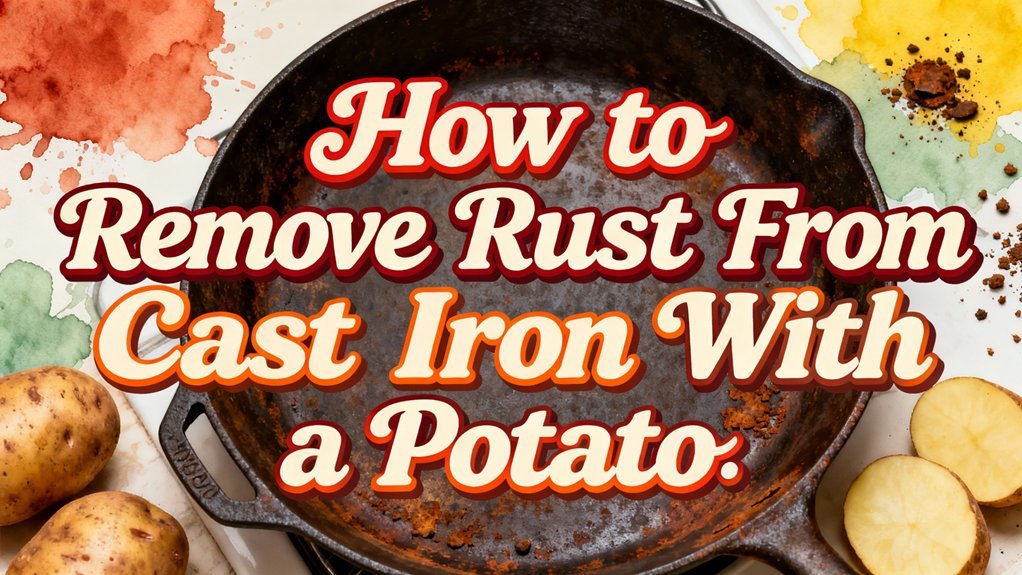
You can remove rust from cast iron by cutting a potato in half and sprinkling coarse salt on rusted areas. Scrub using firm circular motions, focusing on crevices where rust accumulates. The potato’s oxalic acid dissolves surface rust while starch acts as an abrasive paste. Light rust typically clears in 10-15 minutes. Rinse thoroughly and dry immediately to prevent re-rusting. For heavily rusted sections, you’ll want to explore multiple approaches and advanced techniques.
Understanding How Potatoes Remove Rust
While it might seem counterintuitive that a humble potato can tackle rust, the vegetable’s chemical composition makes it surprisingly effective for cast iron restoration. Potatoes contain oxalic acid—a natural compound that initiates chemical reactions with rust composition, specifically converting iron oxide into soluble iron oxalate complexes. At concentrations of 0.1-0.5% by dry weight, this acid effectively dissolves surface rust layers under 0.1 mm thick. The potato’s acidic juice, with a pH of 5.5-6.0, enhances reactivity without corroding your base metal. Additionally, starch in the potato flesh acts as a paste that holds the acid against the rust surface, maximizing contact time and chelating Fe³⁺ ions. For optimal results, pairing the potato with baking soda and salt as mild abrasives will further enhance the scrubbing action and facilitate easier cleanup of rusty residue. This multi-faceted approach makes potatoes a practical, accessible rust removal solution.
Preparing Your Cast Iron for Treatment
Before you begin removing rust from your cast iron, you’ll want to take several essential safety precautions to protect yourself and your work area. Inspect your pan for structural integrity and cracks, then guarantee adequate ventilation. Wear protective gloves to shield your skin from rust particles and abrasive materials.
For material selection, gather medium-sized potatoes, coarse salt, warm soapy water, lint-free cloths, and high smoke point oil. Start by removing loose debris with warm soapy water and a non-metal brush. Allow your pan to air dry completely or use low stovetop heat to eliminate all moisture. Examine rusty areas closely to assess oxidation extent. If rust penetration runs deep, strip remaining seasoning using steel wool for thorough removal. Coarse salt acts as a gentle abrasive for rust elimination when paired with potato scrubbing. After removing rust, you’ll want to apply seasoning oil multiple times to prevent flash rust from forming and restore your skillet’s cooking surface. The circular scrubbing motions help effectively remove rust without damaging the underlying pan. A tight-fitting lid ensures your cast iron maintains optimal heat retention and moisture control during the seasoning process. Well-maintained cast iron is essential for campfire cooking desserts and outdoor culinary adventures. Position your pan on a stable, flat surface and arrange your materials within arm’s reach for efficient workflow. For long-term cast iron storage, consider vacuum sealing to protect against rust formation and environmental damage.
Applying the Potato and Salt Method
Now that you’ve prepared your cast iron, you’re ready to harness the natural cleaning power of potatoes and salt. Cut a regular potato in half to create a flat scrubbing surface. Sprinkle coarse salt generously over the rusted areas—kosher or sea salt varieties work equally well. Press the potato directly onto the salted rust and scrub with firm, consistent pressure using circular motions. Maintain good contact between the potato, salt, and surface to maximize effectiveness. You’ll notice the salt browning as rust particles lift away. Focus extra attention on crevices where rust concentrates. Apply adequate elbow grease for heavily rusted sections, making multiple passes as needed. The potato’s natural acids react with the salt to create an effective rust-removal paste that works without harsh chemicals. As with any cleaning project, ensure you work in a well-ventilated area to maintain safety and comfort during the process. Using non-contact methods like this potato method is a hygienic alternative to other rust removal techniques that may involve more aggressive materials. After removing visible rust buildup, apply a light coat of oil to maintain your skillet’s seasoning and prevent future rust formation. Continue until you’ve removed visible rust buildup, then rinse thoroughly under running water.
What to Expect: Results and Timeline
After you’ve finished scrubbing with the potato and salt method, you’ll want to know what results you can realistically expect. You’ll notice visible rust removal within the first few minutes of scrubbing. For light rust, you’ll complete the full cycle in under 10-15 minutes. Your rust removal expectations should align with the rust severity: surface rust responds quickly, while heavy rust requires extended effort and multiple passes over several days.
After scrubbing, dry your cast iron immediately to prevent re-rusting. The metal will appear buffed and ready for seasoning. Apply oil and heat it for 4-5 minutes at medium temperature to develop a dark patina. To ensure all moisture is completely evaporated and prevent future rust, you can also use your stove or oven to heat the cast iron thoroughly. The protective coating that forms during seasoning is essential for maintaining your skillet’s performance over time. A well-seasoned pan creates a protective layer that prevents rust and excessive iron release, making your cast iron safer and more durable. Your treatment timelines depend on rust depth, but you’ll achieve a glossy, non-stick surface comparable to new cast iron when rust is fully addressed. Regular maintenance through re-seasoning occasionally will help preserve your cast iron’s longevity and performance. Baking soda and vinegar may provide superior results for severe rust buildup that resists the potato method. For best results, wipe surfaces clean with mineral spirits after the initial rust removal to ensure optimal preparation for seasoning.
When to Use Alternative Cleaning Methods
While the potato and salt method works well for light surface rust, you’ll want to evaluate alternative approaches when you’re facing heavy rust, large affected areas, time constraints, or safety concerns.
Deep rust requires chemical intervention beyond potato’s limited oxalic acid penetrations. Vinegar soaks or commercial removers like Evapo-Rust dissolve extensive rust layers effectively. Evapo-Rust is particularly effective because it uses a water-based, non-toxic formula that safely removes rust without leaving harmful residue on cooking surfaces. For large surface areas, electrolysis tanks or abrasive steel wool handle broad patches more efficiently than manual application. After rust removal, applying a protective lubricant creates a clear film that prevents future corrosion and extends the life of your cast iron.
Time-constrained situations benefit from electrolysis automation or self-cleaning oven cycles, which work with minimal scrubbing. Chemical removers demand gloves and ventilation for safety concerns related to caustic fumes. Electrolysis avoids acids but requires specific materials like a sacrificial anode to transfer oxide from the skillet during the cleaning process. Just as oven-safe probe thermometers are designed to remain in place during cooking for continuous monitoring, certain rust removal tools are engineered to work automatically with minimal intervention. Always rinse food-contact items thoroughly before re-seasoning, regardless of your chosen method. Regular maintenance can significantly prevent rust formation in the first place, reducing the need for intensive removal techniques.
Comparing Potato Method to Other Techniques
The potato method provides an effective starting point for rust removal, but you’ll benefit from understanding how it stacks up against other household and advanced techniques. The potato benefits shine for light to moderate rust without harsh chemicals, making it gentle on your cast iron’s surface. However, the Coca-Cola method requires less effort, while the vinegar and baking soda rust comparison shows similar effectiveness with more aggressive action. For severe rust damage, the electrolysis method outperforms all natural approaches, completing removal in just 2-4 hours. The lemon juice and salt method offers comparable results to potatoes but with stronger abrasive action. Your choice depends on rust severity and time availability. Start with potatoes for minor issues; escalate to advanced techniques for heavy damage. Using a wire brush or steel wool can vigorously scrub away rust particles while applying water and soap to aid in the removal process. Once your cast iron is rust-free, you can restore its heat retention and crust formation capabilities by properly seasoning the surface. To prevent future rust and stickiness, always hand wash cast iron with warm water rather than using a dishwasher. After rust removal is complete, apply a thin layer of oil to season the skillet and restore its protective coating. Once seasoned, your cast iron will be ready for cooking flavorful one-pot meals like pork tenderloin with vegetables. Ensure you’re measuring surface temperature changes during the drying process to confirm moisture has been completely removed. Avoid placing your restored cast iron cookware directly on oven floors when heating to high temperatures.
Seasoning and Protecting Your Cast Iron After Cleaning
Once you’ve successfully removed rust from your cast iron, the real work begins—proper seasoning and maintenance will protect your investment for generations. Apply thin oil layers using high smoke-point oils like soybean or flaxseed, then bake at 450-500°F for one hour. You’ll need at least six coats to establish a non-stick base. Cool completely in the oven to enhance adhesion.
Your seasoning techniques don’t stop there. Regular cooking with oil naturally maintains and improves your seasoning without additional effort. Consistent cooking with fats like bacon reinforces the seasoning layer and builds complexity over time. Each use with oil or fat adds another seasoning layer that interlocks with previous coats to create a more durable finish. For preventative care, always dry your pan thoroughly after washing—use salt scrubs instead of soap to preserve the coating. Flaxseed oil undergoes polymerization when heated, creating a harder and more durable nonstick surface than other oils. To further protect exposed cast iron edges, periodically apply a light coat of high smoke point oil baked in the oven to prevent rust recurrence. This process creates a polymerized oil layer that bonds chemically with the cast iron for maximum protection. Store it in a warm oven to prevent moisture buildup. These practices create a durable, rust-resistant surface perfect for eggs and proteins.