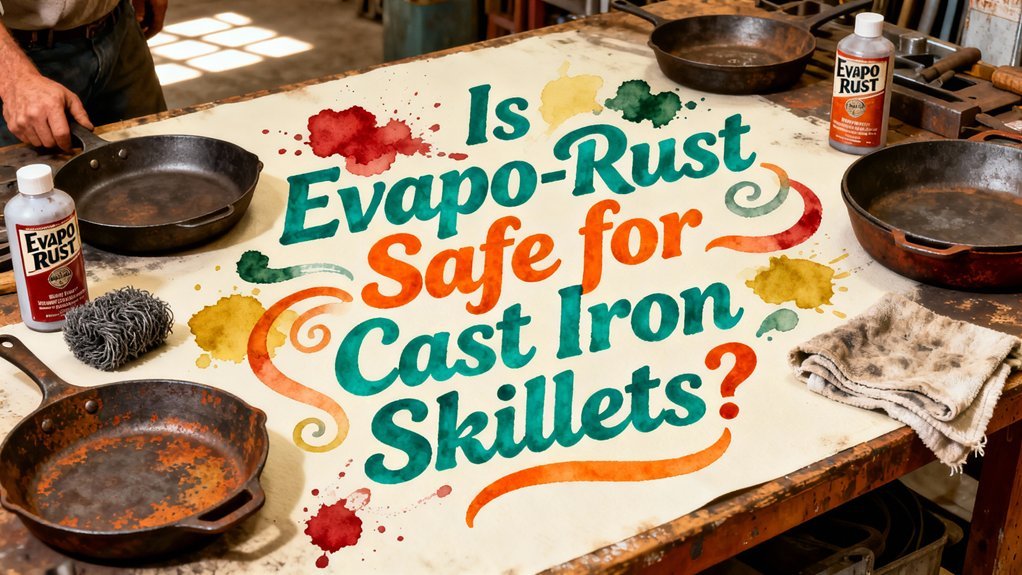
You can safely use Evapo-Rust on cast iron skillets because its chelation mechanism selectively targets rust without etching metal like acidic removers do. The triethanolamine phosphate formulation bonds with ferrous ions, preventing pitting and flash rusting. You’ll need to follow strict soaking protocols—ten minutes for light rust, overnight for heavy rust—and never exceed 48 hours to avoid surface degradation. Immediate rinsing and proper re-seasoning afterward restore your cookware’s protective layers and non-stick properties. Understanding the complete restoration process guarantees peak results.
Understanding Evapo-Rust Formulation and Safety Claims
When you’re evaluating whether Evapo-Rust is safe for cast iron, you’ll need to understand its chemical composition and the safety claims manufacturers make. The formulation relies on water as its primary solvent base, comprising over 83% of the product. Triethanolamine phosphate serves as the active rust-removing agent at 20-30% concentration, while proprietary chelating agents and detergents complete the mixture. This composition demonstrates formulation transparency through documented ingredient profiles. Evapo-Rust’s neutral pH of 6.0-7.0 and non-corrosive properties support its Evapo-Rust efficacy claims. The product doesn’t classify as flammable or trigger toxicity concerns under the Globally Harmonized System. These safety classifications, combined with verified ingredient profiles, establish the foundation for evaluating its suitability for cast iron restoration. Triethanolamine’s metal chelation properties allow it to bind with iron oxide molecules, effectively lifting rust from the cast iron surface without aggressive chemical action.
How the Chelation Process Works on Rust
Since Evapo-Rust’s effectiveness hinges on its chelation mechanism rather than acidic dissolution, understanding this chemical process clarifies why it’s gentler on cast iron than traditional rust removers. When you immerse rusted cast iron in Evapo-Rust, the solution’s active ingredients form multiple dative covalent bonds with iron oxide molecules. These metal bonding interactions selectively target ferrous ions within the rust lattice, drawing them into stable chelate complexes that remain water-soluble. The chelation benefits become evident as rust dissolves without etching or weakening the underlying metal. Meanwhile, sulfur-bearing organic molecules facilitate iron extraction, allowing the chelator to continue working. This selective process leaves your cast iron base untouched, preventing the pitting and flash rusting that acidic alternatives cause. Unlike strong acids that pose safety risks and may damage the underlying metal, water-based chelation solutions specifically target rust while preserving the integrity of your cookware. Non-contact measurement devices demonstrate how safe measurement technology can be designed to avoid harmful effects when properly used. After removing rust, proper care like seasoning the cast iron will help maintain the cookware’s quality and prevent future corrosion. For optimal results, complete the restoration process by seasoning multiple times with high-quality oil to build a protective layer. For regular maintenance between rust treatments, washing with dish soap and warm water using a soft sponge is an effective way to keep your cast iron clean without causing damage. To tackle stuck-on food and buildup that may accumulate on your seasoned cast iron, stiff-bristled brushes are essential for removal without compromising the protective layer. The solution will darken and turn black as rust dissolves, which indicates the chelation process is actively working to remove corrosion from your cast iron.
Proper Soaking Times to Protect Your Cookware
Now that you understand how Evapo-Rust’s chelation mechanism protects cast iron, you’ll want to know how long to soak your cookware to maximize this benefit.
Your soaking times depend directly on rust levels. For light rust, ten minutes suffices—complete submersion covers all affected areas effectively. Heavy rust demands an overnight soak at temperatures exceeding 65°F to activate the solution properly. You shouldn’t exceed 48 hours total to prevent etching on pristine surfaces.
After soaking, you’ll rinse immediately with water and air dry completely. If deep rust persists in pits, re-immerse your skillet for additional cycles. This methodical approach guarantees ideal rust removal while preserving your cookware’s structural integrity. Once rust removal is complete, re-seasoning your cast iron is required for optimal performance and to restore the protective seasoning layer that enhances your cooking experience. A well-seasoned cast iron pan creates a protective barrier that prevents rust and excessive iron release, ensuring safe and effective cooking. To maintain your skillet’s longevity between uses, apply a thin layer of oil to the cooking surface after each cleaning. For multiple restorations, consider purchasing bulk five-gallon containers to achieve better cost-to-benefit ratios.
Between re-immersions, repeat rinse and dry procedures. To maintain your cast iron’s longevity, store the cookware in a dry place after each use.
Critical Risks of Extended Submersion
While Evapo-Rust’s chelation process effectively removes rust without the hazards of acidic alternatives, prolonged soaking introduces distinct degradation mechanisms that compromise cast iron integrity. You’ll encounter critical submersion risks when submerging cast iron beyond 12 hours, with significant damage occurring after 2 days. The solution selectively removes iron while leaving carbon residue, creating surface finish degradation that transforms machined surfaces into rough, dull, etched finishes. You cannot restore these textural changes through standard seasoning alone. This degradation directly impacts cooking performance, reducing non-stick properties and food release effectiveness. Cast iron proves particularly vulnerable compared to hardened steel compositions, which can withstand soaking for up to 3-4 days without similar adverse effects. Maintaining seasoning prevents rust formation, offering a more effective long-term protection strategy than extended chemical soaking. Traditional methods like seasoning cast iron with lard create durable protective layers that resist rust naturally. Applying thin layers of oil while the skillet is warm helps bond the oil into the pan’s surface and create a natural seasoned finish that protects against rust. To protect your cast iron, thoroughly dry the skillet immediately after washing to prevent rust formation before it starts. Always hand wash cast iron with warm soapy water and a brush to maintain the protective seasoning layer. Cast iron skillets develop these protective seasoned layers over time, enhancing both flavor and durability when properly maintained. You must carefully balance rust removal benefits against these irreversible surface alterations.
Step-by-Step Post-Treatment and Seasoning Process
After you’ve removed rust with Evapo-Rust, your cast iron requires a methodical post-treatment sequence to restore functionality and prevent re-oxidation. Begin your post treatment cleanup by thoroughly rinsing the cookware with water, ensuring complete chemical removal through multiple washings. Heat the skillet to 200°F to eliminate residual moisture and open metal pores for ideal oil absorption. Allowing your cookware to air dry completely after treatment prevents flash rusting and extends the time before rust can reform. VAPRust can be reused after the initial application, making it an economical choice for multiple restoration projects.
For effective seasoning tips, apply a light coating of organic flaxseed oil or comparable product, then wipe away excess with a cloth to prevent pooling. Using the coarse texture of kosher salt as a gentle abrasive can help remove any remaining impurities before seasoning. Oils and fats with high smoke points, such as vegetable oil, canola oil, or grapeseed oil, are recommended for optimal seasoning results without burning or imparting unwanted flavors. The seasoning process creates a polymerized oil layer that bonds chemically with the cast iron, forming a durable protective coating. Position your cookware upside down in a preheated oven during the seasoning cycle. This methodical approach establishes the Rust-Block coating, providing extended rust prevention lasting up to one year. Immediate seasoning after heating prevents oxidation during this vulnerable drying period. Proper storage with separators to allow airflow helps preserve the skillet’s cooking surface for long-term durability. To further protect your investment, store the skillet in a cool, dry place after the seasoning process is complete.
Comparing Evapo-Rust to Alternative Rust Removal Methods
Evapo-Rust’s effectiveness comparison reveals significant advantages over alternative treatments. Unlike corrosive acids that damage underlying metal surfaces, Evapo-Rust‘s selective chelation process removes rust while preserving cast iron integrity. You’ll notice the pH-neutral formulation prevents excessive etching that alternative treatments commonly cause.
Where alternative treatments require single-use applications, Evapo-Rust’s reusable solution extends across multiple projects, substantially reducing per-application costs. Professional restoration services demand considerably higher expenses for equivalent results. After restoring your skillet with Evapo-Rust, remember that proper maintenance and care, including regular seasoning and appropriate cleaning methods, will help prevent rust from returning. Whether you’re preparing a Dutch oven for campfire and oven desserts or everyday cooking, maintaining your cast iron investment ensures its longevity.
The evidence-based methodical analysis demonstrates Evapo-Rust outperforms harsher alternatives through its water-based composition and non-corrosive nature, making it the superior choice for preserving heirloom pieces while maintaining cost efficiency. To achieve optimal results and prevent re-rusting, you should avoid extended soaking times of two days or longer on cast iron, as the product may remove more than just rust and cause surface etching. For everyday maintenance between restorations, deglazing with wine or stock offers a gentler alternative to keep your skillet in optimal condition. Building up a durable seasoning layer through multiple rounds of oiling and baking will further protect your cast iron from future rust formation.
Real Results From Cast Iron Restoration Projects
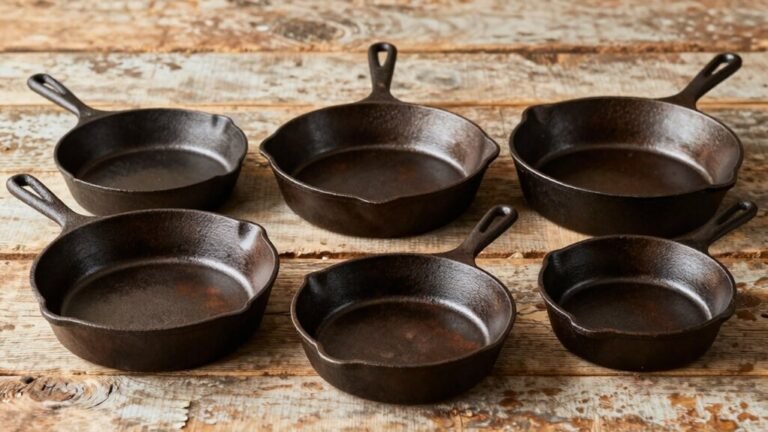
Real-world restoration projects reveal Evapo-Rust’s practical performance across diverse cast iron pieces, from cornstick pans to vintage skillets. You’ll find the product eliminates rust effectively within initial soaking periods, though prolonged exposure—beyond 24 hours—etches pristine cast iron surfaces, creating rough, dulled finishes on rust-free areas. Steel components remain unaffected, developing only a patina layer.
Your post-treatment process considerably impacts results. Hot water rinsing triggers flash rust formation, while thorough cleaning with Dawn dish soap removes chemical residue before seasoning. The manufacturer recommends rinsing without soap, though some users apply iron migration preventive measures like Dawn soap as an additional safeguard. It’s important to note that Evapo-Rust is not intended for cookware, as caution should be exercised when using this product on pieces meant for food preparation. To maintain your cast iron’s condition long-term, consider periodically seasoning with a light coat of high smoke point oil baked in the oven. For added protection, you can also create a crochet handle cover using heat-resistant cotton yarn to shield your hands during cooking. Just as proper oven temperature] is critical for cooking results, consistent heat during the seasoning process ensures optimal finish quality. Building a resilient, non-stick layer] through proper seasoning improves the skillet’s performance with use over time and protects against rust. You’ll achieve like-new restoration when you properly dry, scrub, and oven-season treated pans. Performance tests demonstrate excellent non-stick properties and heat retention following meticulous cleaning protocols.
Best Practices for Preventing Flash Rust and Damage
Flash rust—the rapid oxidation that occurs when treated cast iron contacts moisture and oxygen—represents the primary threat to your restoration efforts after Evapo-Rust treatment. You’ll prevent this effectively through methodical rust prevention techniques. After rinsing, re-immerse your skillet in the Evapo-Rust solution to create a protective barrier against oxidation. Alternatively, employ hot water rinsing combined with immediate drying to minimize flash rust occurrence. For sustained protection, heat your cookware post-treatment to eliminate residual moisture and open metal pores. Your soaking techniques greatly impact long-term durability—air drying alone protects for up to two weeks, while Rust-Block coating application extends protection to one year. This systematic approach guarantees your restoration investment remains corrosion-free.