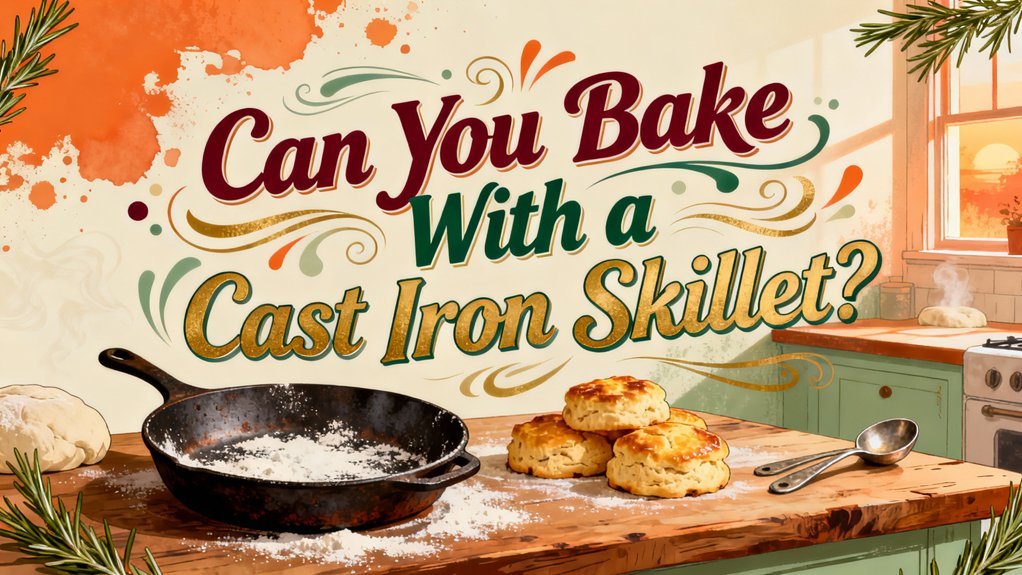
Yes, you can bake with a cast iron skillet. You’ll achieve exceptional heat retention and even browning for bread, rolls, quiches, and roasted vegetables. The skillet’s mass prevents temperature fluctuations, while a fitted lid traps steam for superior crust development. Reduce your oven temperature by 25 degrees and check doneness early, as cast iron browns faster than standard pans. Maintain your skillet’s seasoning through proper cleaning and occasional oil application. There’s much more to uncover about maximizing your skillet’s baking potential.
Suitability for Baking
Cast iron skillets excel at baking because they retain heat exceptionally well, which promotes even browning and accelerates the crust development on your baked goods compared to conventional bakeware. This superior thermal performance makes cast iron ideal for achieving crispy edges on cornbread, pizza, and biscuits.
Your skillet’s baking versatility extends across multiple applications. You’ll find it performs admirably for bread, rolls, roasted vegetables, and quiches. The skillet benefits include a natural non-stick surface that develops with age, eliminating synthetic coating concerns. A heavy lid can also be used with your cast iron to trap steam and keep baked goods moist while developing a crispy exterior. Cast iron’s even heat distribution ensures your baked goods cook uniformly throughout. Before baking, coat your cast iron with nonstick spray to ensure easier release of your finished baked goods. Properly preheating the skillet allows the batter to immediately sizzle upon contact, forming the signature crispy bottom and edges that cornbread enthusiasts love. Using a fitted lid transforms your cast iron skillet into a multi-functional baking tool that enables oven-to-table preparations with enhanced moisture retention. Beyond traditional oven baking, cast iron’s versatility extends to grills and campfires, making it an exceptional choice for outdoor cooking adventures.
However, you’ll need to adjust your recipe’s cook times since cast iron browns faster. Check doneness a few minutes early using the toothpick test. Whether you’re baking indoors or over a campfire, cast iron delivers consistent, professional-quality results that improve with each use.
Seasoning Process
Proper seasoning transforms your skillet into a naturally non-stick cooking surface that’ll only improve with time. You’ll start by scrubbing your pan with warm soapy water and drying it thoroughly. Apply a thin, even oil layer across the entire surface, then wipe away excess to prevent pooling.
Position your skillet upside down on the center oven rack at 450-500°F for one hour. Place aluminum foil below to catch drippings. Once cooled completely in the oven, you’ve completed one seasoning cycle. Frequent use enhances the seasoning strength over time as you continue cooking with your cast iron. Testing with Crisco shortening at optimal temperature produces a smooth, black patina with excellent non-stick properties.
For oil types, vegetable oil and canola oil work exceptionally well due to their high smoke point. Rendered animal fat and Crisco shortening offer viable alternatives. Avoid using butter for initial seasoning since it has a low smoke point around 350 degrees Fahrenheit and will burn quickly on heated cast iron. Repeat this seasoning process multiple times for best results. The polymerization process creates hard, durable layers that strengthen with regular cooking applications, building the most effective non-stick surface over time. These seasoning tips build durable polymerized layers that strengthen with regular cooking applications. For a stovetop alternative, heat your oiled skillet over medium heat until it begins to smoke, then maintain that smoke for 15-20 minutes to allow the oil to penetrate and create the same durable non-stick layer.
Temperature Adjustments
Once you’ve built up your skillet’s seasoning layers, you’ll need to master temperature control for successful baking. Cast iron’s superior heat retention causes foods to brown faster than conventional pans, requiring strategic baking adjustments.
Reduce your oven temperature by 25 degrees from standard recipe recommendations to prevent over-baking and drying. Monitor baked goods several minutes before the recipe’s expected doneness time—check with a toothpick for a clean exit indicating completion.
Foods brown quicker in cast iron due to efficient heat distribution, so adjust cooking times accordingly. If results show over-browning on bottoms or dry interiors, lower your oven temperature further. To maintain optimal seasoning performance during repeated baking sessions, frequent use of your skillet is recommended. Additionally, foods may continue to cook after removing your cast iron from the oven, so timing precision is essential. Cast iron’s heat retention also makes it ideal for Dutch oven baking where even heat distribution is crucial. Similar to stovetop cooking, cast iron can help develop a golden crust on baked goods through its excellent heat conduction properties. When using cast iron on your oven, be aware that cast iron’s superior heat retention can cause the baking surface to become extremely hot, so handle with appropriate caution. The trapped steam during baking] helps develop a crispy, golden crust while maintaining a soft interior. For optimal results, avoid using abrasive cleansers when cleaning your skillet between baking sessions to preserve the enamel coating. Let seasoned cast iron cool completely in the oven post-bake to develop ideal patina and prevent thermal shock.
Baking Techniques
Mastering heat distribution and crust development requires understanding how cast iron’s thermal properties differ from conventional baking vessels. You’ll achieve superior browning by preheating your skillet thoroughly before introducing batter or dough. This practice capitalizes on cast iron’s exceptional heat retention, ensuring immediate crust formation.
For ideal baking techniques, you should position your skillet centrally on the oven rack to maintain consistent temperature throughout the baking process. You’ll notice that cast iron’s substantial mass prevents temperature fluctuations that typically cause uneven browning. A well-seasoned pan provides excellent non-stick properties that further enhance your baking results. Cast iron lids can also help with heat retention and moisture control during baking, similar to their benefits in braising and slow cooking applications. The enclosed environment created by using a lid during initial baking mimics professional steam-injected ovens, resulting in professional-quality bread at home.
You can employ cast iron effectively across diverse applications—from cornbread and no-knead bread to skillet cookies and pizza. Each application benefits from cast iron’s steady thermal environment. You’ll achieve crispy, golden exteriors while maintaining evenly baked interiors, leveraging the skillet’s natural heat distribution capabilities for professional-quality results. Cooking with cast iron can also enhance the flavor of your baked goods compared to traditional baking vessels. Like using temperature-controlled water baths for precise cooking, cast iron provides consistent thermal management for reliable baking outcomes. Similar to how proper heat management is crucial in specialized cooking techniques like braising, cast iron’s ability to maintain neutral heat distribution ensures predictable baking results. Allowing your baked goods to rest briefly after removing them from the skillet helps confirm they are fully cooked and allows proper texture development.
Cleaning and Maintenance
Because cast iron’s longevity depends on consistent care, you’ll need to establish a straightforward cleaning routine immediately after each use. Your cleaning frequency should occur right after cooking while the pan’s still warm. Rinse under hot water with a scrub brush, then wash with warm soapy water and a nylon pad. Never use the dishwasher—high heat and harsh detergents damage seasoning.
Essential maintenance tips include drying thoroughly with a towel, focusing on all crevices and the rim. For stuck-on food, apply baking soda paste or use kosher salt as an abrasive scrub. After drying completely, rub a thin vegetable oil layer across the surface for protection. To prevent cracking when cleaning a warm skillet, always avoid applying cold water on hot steel. Store with plastic separators ensuring airflow, or place your pan in a warm oven to cool together with it for enhanced seasoning preservation. These practices prevent rust formation and preserve your skillet’s seasoning for years. To build a more durable nonstick surface, periodically bake your skillet upside down at progressively higher temperatures in a preheated oven to strengthen the seasoning layer. Consider using high smoke-point oils like avocado or grapeseed oil to build up durable seasoning layers over time. Small amounts of mild soap do not harm the skillet, making gentle daily cleaning an effective approach to maintaining your cast iron. Like Dutch ovens, cast iron skillets excel at preparing one-pot meals that combine multiple ingredients for convenient weeknight cooking, similar to the slow-roasting method used for tender braised dishes.
Advantages and Examples
Cast iron skillets deliver superior baking results through their exceptional heat properties and remarkable versatility. You’ll experience even heat distribution that prevents domed centers and produces crisp, golden edges without additional frosting. The baking benefits extend beyond appearance—your skillet maintains temperature longer than aluminum alternatives, ensuring consistent edge-to-edge cooking.
Your recipe suggestions range widely: cornbread and biscuits bake beautifully, while cobblers and fruit crumbles remain warm for ice cream topping. You can prepare tarte tatin with caramelized fruit layers or achieve superior pie crusts through the heat reservoir effect. The skillet shifts seamlessly from stovetop to oven, supporting hybrid recipes effortlessly. You’ll also enjoy serving cakes directly from the pan, eliminating transfer risks and showcasing bronzed sugar syrups characteristic of upside-down cake preparations. Cast iron can be restored to functionality after neglect or mishaps, making it a long-term investment for your kitchen. Single-layer recipes work best in cast iron, so avoid stacking multiple layers unless you have matching pans available.