You can season your cast iron skillet with coconut oil through polymerization, but refined varieties work better than virgin options. Refined coconut oil‘s higher smoke point (400–450°F) creates more durable protective layers without thermal breakdown. Apply thin, even coats and bake upside down at 400°F for 50–60 minutes, repeating 3–5 times for best results. While coconut oil builds effective seasoning, comparing it to alternatives like tallow reveals important performance distinctions worth exploring.
How Coconut Oil Creates a Seasoning Layer
When you heat a thin layer of coconut oil on cast iron, it bonds to the metal’s surface and begins forming a seasoning coating. This polymerization process creates protective layers that build over repeated applications. Each time you apply coconut oil and heat it, you’re depositing another thin, non-tacky polish that prevents blotches and rust.
The coconut oil benefits extend beyond initial seasoning. During maintenance, you’ll apply a teaspoon of coconut oil to your warm pan after cooking, spreading it evenly with a paper towel. This seasoning technique, repeated 1-4 times initially, establishes a durable foundation. You can enhance adhesion by rubbing additional oil during the cooking process itself. For optimal results, maintain the smoke by reducing heat to prevent burning while allowing the oil to polymerize properly. Oils with higher levels of unsaturated fats tend to create more durable seasoning layers through better polymerization. Combining coconut oil with flaxseed and beeswax amplifies this effect, creating an even more resilient seasoned surface. Like FoodSaver bags that are constructed with multi-layer plastic for durability, cast iron seasoning benefits from layered application techniques that build protective coatings over time. However, consistency in application thickness is vital for durability, as excess layers may cause flaking issues. Refined coconut oil is particularly effective because it has a smoke point between 370-450 degrees Fahrenheit, making it suitable for high-heat seasoning applications. To ensure even coating distribution, press firmly on the oiled surface with a paper towel, similar to how vacuum sealing requires firm pressure to achieve a proper seal. For best results during oven seasoning, use oils with high smoke points like avocado or flaxseed oil rather than coconut oil alone, as the double boiler blend is better suited for conditioning between uses.
Understanding Smoke Point and Polymerization
To achieve ideal seasoning results with coconut oil, you’ll need to understand how smoke point and polymerization work together. Smoke point represents the temperature where oil breaks down and produces smoke—coconut oil reaches approximately 350°F. You’ll want to season below this threshold to prevent oil breakdown while still triggering polymerization.
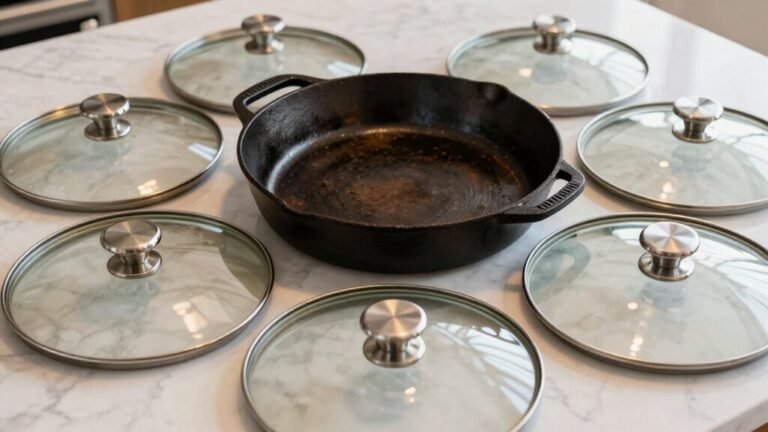
Polymerization occurs when oil molecules link together, forming a hard, protective layer on your cast iron. You’ll apply thin coats and heat them slightly above the smoke point to initiate this bonding process. Multiple heating cycles build durable seasoning through repeated polymerization rounds. Unlike polyunsaturated fat oils, coconut oil contains higher saturated fat content, which limits its effectiveness for creating resilient seasoning layers. Lard, a rendered pig fat, has traditionally been used for cast iron seasoning and creates a durable seasoning layer through polymerization. For best results, ensure your cookware is thoroughly cleaned before application to maximize the coating’s effectiveness. When maintaining your cast iron, using a fire-safe surface like the skillet itself helps protect your kitchen during the heating process. Proper seasoning involves heating the oil to its smoke point so it bonds chemically with the cast iron, forming a protective layer. A fitted lid can help retain heat during the seasoning process by trapping warmth inside the skillet.
Coconut oil’s moderate heat stability means you’ll achieve successful seasoning at moderate temperatures around 250-350°F. Though it offers limited polymerization compared to avocado or flaxseed oils, coconut oil remains viable for cast iron seasoning when properly applied. When comparing oil options, refined coconut oil specifically reaches approximately 450°F, offering better heat tolerance than unrefined varieties for more effective seasoning results.
Refined vs. Virgin Coconut Oil for Seasoning
Refined coconut oil offers a higher smoke point (400–450°F) and neutral flavor profile, reducing risk of burning during application and eliminating coconut taste transfer to foods. However, virgin oil retains natural antioxidants like polyphenols that refined processing removes.
Virgin characteristics include coconut aroma and lower smoke point (320–350°F), which can cause incomplete polymerization and flavor persistence if temperatures aren’t carefully controlled. Regular cooking builds natural seasoning over time, so initial application method becomes less critical with consistent use. Nutiva Virgin Coconut Oil is a recommended brand for those prioritizing antioxidant retention. To achieve the best results, ensure your cast iron skillet reaches the proper sear temperature before adding oil to prevent burning and encourage proper seasoning development. Like a Dutch oven for even cooking, cast iron distributes heat uniformly across its surface to support optimal seasoning. After baking, allow the skillet to cool inside the oven to ensure the seasoning fully cures before use.
For cast-iron seasoning, refined benefits include superior thermal safety and sensory neutrality. Yet both contain high saturated-fat content, limiting polymerization potential compared to unsaturated oils. Beef tallow offers superior heat stability with a smoke point around 400°F, making it a more durable alternative for building protective seasoning layers. Your choice depends on prioritizing durability or flavor control. Proper storage of your seasoned cast iron, similar to maintaining frozen food quality, requires consistent care to preserve the seasoning layer over extended periods.
Step-by-Step Seasoning Process
Three foundational preparation steps determine your seasoning’s success: removing contaminants, achieving complete dryness, and establishing ideal pan temperature.
Begin by scrubbing your pan with warm, soapy water. For rusty or old pans, use an abrasive scrubber to reveal bare metal. Dry thoroughly with a dishcloth to eliminate all moisture. Warm your pan on low heat before oil application. If rust persists, you can remove it with steel wool or sandpaper before proceeding with seasoning. To prevent flash rust from forming, ensure your pan is completely dry before any oiling begins.
Your oil application technique directly impacts seasoning quality. Apply a thin, even coat of melted refined coconut oil across the interior, exterior, handle, and sides. Buff immediately with a paper towel to prevent pooling. Avoid thick, tacky spots that create uneven seasoning layers. Using heat-blocking mitts will protect your hands from the hot skillet during this process. This seasoned layer protects the iron and prevents harmful chemicals from leaching into food. Proper seasoning builds connective layers similar to how slow braising develops depth in cooking. Unlike traditional oils, some oils like flaxseed create a harder, more durable nonstick finish through polymerization when heated.
Preheat your oven to 400°F. Place the oiled pan upside down on the upper rack with a foil-lined tray below to catch drips. Bake for 50–60 minutes, then cool completely inside the oven. Repeat these seasoning techniques three to five times for best results.
Building and Maintaining Your Seasoning
Once you’ve built your initial seasoning layers, proper maintenance determines whether your cast iron skillet develops a durable, non-stick patina or gradually loses its protective coating. You’ll maintain your seasoning by cooking fatty foods like bacon or steak, which build protective layers through lipid polymerization. After each cleaning and drying, apply a light oil coat—your oil choices matter greatly. Coconut oil’s high smoke point makes it effective, though consistency varies by type. To prevent rust and preserve your skillet’s longevity, store your skillet dry with minimal oil to prevent stickiness. For long-term protection, periodically bake your oiled skillet upside down at 350°F for about one hour to polymerize the coating. When selecting oils for maintenance, consider options with high smoke points similar to those used in professional seasoning methods. Always use non-abrasive sponges or cloths when cleaning to avoid damaging the seasoned surface. Monitor your seasoning periodically; if wear becomes apparent, re-season using your established seasoning techniques. Similar to how Dutch oven cooking develops rich, savory flavors through long, moist heat, cast iron seasoning strengthens through consistent use and proper maintenance. For family-sized meals and everyday cooking, the tight-fitting lid on quality cookware like Dutch ovens helps lock in moisture much like a well-seasoned skillet retains its non-stick properties. This cyclical maintenance prevents rust development and strengthens your non-stick surface over time. Regular use of cookware naturally improves seasoning, so frequent cooking enhances your skillet’s performance.
Coconut Oil vs. Other Seasoning Oils
Refined coconut oil’s higher smoke point (~450°F) also outperforms unrefined variants, enabling reliable oven-seasoning temperatures without premature burning. Compared with liquid oils, coconut’s semi-solid nature at room temperature creates a firmer polymerized base layer, yielding a smoother nonstick finish when applied correctly in thin coats. The saturated fat content in refined coconut oil resists rancidity, ensuring that your seasoning layer remains durable and maintains its non-stick properties over extended periods with minimal maintenance. For optimal results, warm the pan prior to applying the coconut oil to ensure easier spreading and better adhesion to the cast iron surface. To verify that your seasoning has reached the proper temperature during the oven process, you can use an infrared thermometer to monitor the cast iron’s surface temperature and confirm it aligns with your target seasoning temperature. Beyond temperature monitoring, non-contact measurement capability allows you to check your pan’s surface without interrupting the seasoning process or risking burns from direct contact with the hot cookware. Like alternative cookware options such as baking dishes, cast iron cookware seasoned with coconut oil offers versatile cooking methods for various culinary applications. Cast iron cookware seasoned with coconut oil is particularly well-suited for campfire cooking desserts where reliable nonstick performance enhances the ease of preparing treats outdoors. Regular use and proper maintenance help build and preserve the skillet’s seasoning, creating a long-lasting non-stick surface that improves over time.
Food Safety and Flavor Considerations
While coconut oil’s semi-solid consistency and refined smoke point make it an attractive seasoning choice, you’ll want to understand the trade-offs between polymerization quality, food safety, and flavor integrity. Incomplete polymerization creates sticky surfaces that trap food particles and microbes, raising health risks if your pan isn’t thoroughly dried before storage. Thermal decomposition past the smoke point generates acrolein and other respiratory irritants during high-heat seasoning cycles. For optimal results, flaxseed oil is preferred for initial seasoning due to its superior hardness and smooth texture compared to coconut oil. You’ll also face flavor alteration from coconut oil’s persistent aroma if seasoning temperatures remain too low, plus potential rancidity once residues accumulate. Properly seasoned cast iron pans should be seasoned at 450 degrees Fahrenheit for one hour to ensure effective polymerization and rust prevention. The natural seasoning that develops over time also improves the pan’s non-stick properties and durability. Effective seasoning requires heating the oil to its smoke point for polymerization, which bonds the oil into the pan’s surface to create a durable finished layer. For accurate temperature monitoring during the seasoning process, consider using infrared thermometers to ensure you reach the optimal heat levels without guesswork. Avoid storing food in your skillet, as this damages the seasoning layer and compromises its protective qualities. Acidic foods like tomato may accelerate layer breakdown, releasing metallic notes. Patchy, undercured coconut layers reduce moisture protection, increasing rust vulnerability and compromising your skillet’s longevity. Applying a light layer of oil before storing your skillet helps maintain its seasoning between uses.
Expert Recommendations and Evidence
Three key properties make refined coconut oil an excellent choice for cast iron seasoning: it reaches 450°F (232°C), well above the 375-400°F oven temperature you’ll use, enabling complete polymerization without thermal breakdown; its saturated fat content resists rancidity and oxidation, extending the durability of your seasoning layer; and it’ll remain virtually flavorless and odorless, preventing unwanted flavor transfer to foods like eggs or steaks.
Expert preferences consistently rank refined coconut oil alongside tallow and lard for creating durable non-stick finishes. The Paleo community particularly endorses it as a healthy alternative to peanut oil, demonstrating seasoning benefits across diverse cooking applications. You’ll find that the semi-solid state at room temperature—hardening below 76°F (24°C)—facilitates smooth, even coating formation, delivering superior results compared to less stable oils. To prevent spots, blotches, and streaking, wipe away all excess oil after application. Like no-knead bread recipes, cast iron seasoning benefits from minimal intervention once the process is underway. Similar to how proper preheating procedures are critical in specialized cooking techniques, allowing your seasoning oil to reach full polymerization ensures optimal cast iron performance. For cast iron cookware, the interior finish of your pan can also influence how well you monitor the seasoning process over time. When storing your seasoned skillet for extended periods, coat with oil and cover to prevent dust accumulation and maintain the protective seasoning layer.